

# Live Blackjack Online Casino UK: Table Pace and Rules
::: hero-subtitle
A practical look at live dealers, table conditions, bet options and the costs that can shape a blackjack session.
:::
## What “Best” Means When Live Blackjack Runs at a Different Pace
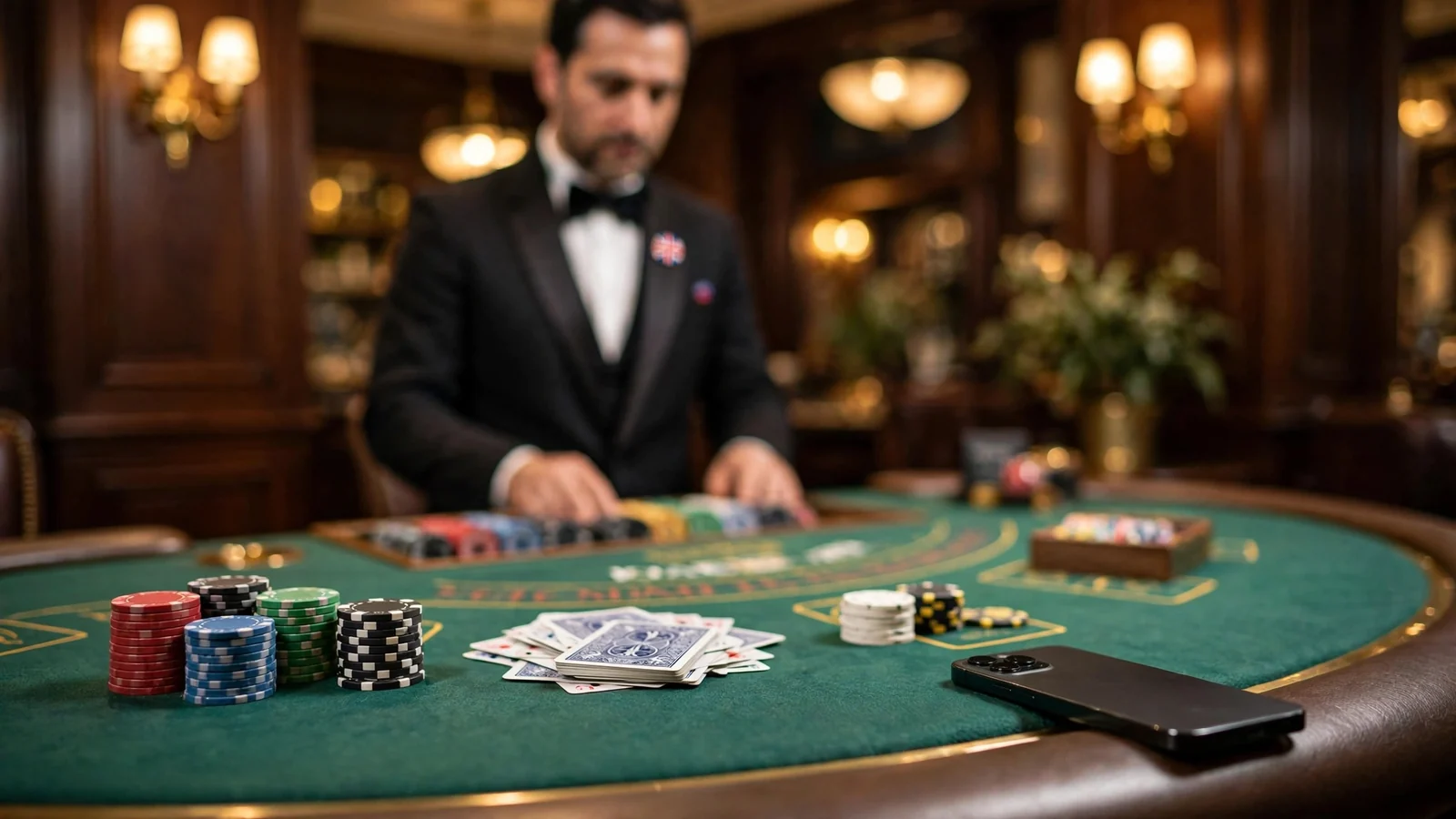
“Best” is a poor label for a live blackjack table unless the reason for the choice is clear. A ranking can make unlike things look comparable: one table may move quickly but require a larger opening stake, while another may feel more measured and suit a smaller budget. I have found it more useful to judge a table by the conditions it imposes than by a badge or a position on a list.
Pace is the first practical difference. A digital blackjack game can move from one hand to the next without waiting for a studio process. Live play has a human rhythm, so decisions and the progress of each round take longer. That is part of the format, not necessarily a defect. It also changes how much time a session occupies. A table that seems suitable when considered only by its rules may be a poor fit if its tempo makes a short session difficult to manage.
::: top-operators
Choosing a live blackjack casino involves more than the game itself, so it helps to check the practical details available for each option. This list gives a concise reference point for considering the operators.
### 1. Amunbet
**Payout speed:** 1-3 business days
Amunbet is listed with a stated payout speed of 1–3 business days.
—
### 2. Dieselwin
**Payout speed:** 1-3 business days
Dieselwin’s available payout-speed information is 1–3 business days.
—
### 3. Zombillion
**Payout speed:** 1-3 business days
Zombillion is noted here for a stated payout speed of 1–3 business days.
—
### 4. BeOnBet
**Payout speed:** 1-3 business days
BeOnBet has a listed payout speed of 1–3 business days.
—
### 5. NightLuck
**Payout speed:** 1-3 business days
NightLuck’s stated payout speed is 1–3 business days.
—
### 6. Jetsetspins
**Payout speed:** 1-3 business days
Jetsetspins is listed with payout speed information of 1–3 business days.
—
### 7. x3bet
**Payout speed:** 1-3 business days
x3bet has a stated payout speed of 1–3 business days.
—
### 8. Britsino
**Payout speed:** 1-3 business days
Britsino’s listed payout speed is 1–3 business days.
—
### 9. SlotoSport
**Payout speed:** 1-3 business days
SlotoSport is noted for a stated payout speed of 1–3 business days.
—
### 10. Revery Play
**Payout speed:** 1-3 business days
Revery Play is listed with a payout speed of 1–3 business days.
:::
This matters because “fast” and “good” are not interchangeable. A quicker digital game may suit someone who values a brisk sequence, while a live table may appeal to someone who prefers a slower, more tangible pace. Neither preference establishes that one format is better. The useful comparison is between the pace offered and the kind of session being considered, not between a marketing claim and an imagined ideal.
Minimum stakes are another filter, and they can make a table unsuitable before its other qualities matter. A lower starting point gives more room to keep individual bets modest; a higher one narrows that room. The important figure is the actual minimum shown for the table at the time of play. It should be treated as a condition of entry, not as a suggestion that a larger stake is needed to get a worthwhile experience.
I have seen how easily a comparison becomes misleading when it borrows a number from another game. A specialist review has cited [live roulette and baccarat tables](/casino-games/live-casino-lightning-roulette-uk/) starting at around 20p, while noting higher starting limits for blackjack. That is one review’s snapshot, not a dependable benchmark for the whole market or a promise about any particular table. The useful point is narrower: blackjack’s starting stake may differ from the low entry point seen elsewhere in a live casino, so the table’s own displayed minimum matters more than a broad headline.
$$LINKCARD best-keno-online-casino-uk$$
A minimum is not the same as a comfortable session budget. A table can technically accept a small opening bet and still feel costly over time if the pace is slow and the session continues longer than planned. Before play, the budget needs to be set independently of the table’s minimum. If the two do not fit together, the table is not a match, however prominently it is described.
There is also a practical requirement that is easy to understate: a stable internet connection. Live play depends on a continuous stream, unlike a digital game that does not rely on a real-time studio feed. An unstable connection can interrupt the experience at the point when attention is needed. This is not a minor convenience issue. It is part of whether the format is workable in the first place.
For that reason, a comparison should start with three plain questions: does the pace suit the intended session, is the minimum stake compatible with the set budget, and can the connection support uninterrupted live play? Those questions reveal more than a general claim that a casino has a “great” blackjack offering. “Great” often compresses several different conditions into one attractive word. The detail is what counts.
The same discipline applies to rankings. A list may compare facilities or present a convenient starting point, but a position on it cannot establish that a particular table fits every player. Tables differ in pace and minimum stakes, and those differences affect the experience directly. A useful assessment keeps the criteria visible rather than treating a single overall score as a substitute for them.
::: pre-bet-checklist Table Suitability Check
– [ ] Confirm the pace suits the intended session
– [ ] Verify the minimum stake is compatible with the set budget
– [ ] Ensure the internet connection can support uninterrupted live play
:::
I would not call a table the best simply because its minimum looks low, either. The pace may be wrong for the intended session, or the connection may not be dependable. Nor does a slower table automatically offer better value. “Value” is often used as if it described a measurable advantage, when it may only mean that the table’s conditions happen to suit the person choosing it. That distinction matters.
A sensible shortlist therefore begins with fit, not fame: pace, stake threshold, and the practical ability to remain connected. Those are not glamorous features, but they determine whether the table can be used as intended. The label matters less. The conditions do.
## The Dealer Is Live; the Cards Are Physical
A live blackjack table is not an animation dressed up to resemble a casino. The game is streamed from a studio, where a human dealer handles physical cards from a standard deck. The picture reaching the screen is a real-time view of that activity, rather than a sequence generated by software to imitate a dealer.
That distinction changes the feel of the game. The dealer is visible as a person working at a table, and the cards are dealt in front of the camera. The stream gives the session a shared, unfolding setting: the dealer performs the dealing, while players watch from separate locations. It is closer to observing a casino table through a broadcast than to watching a computer animation.
In a live dealer blackjack casino, the studio is part of the product, not merely a background image. A physical card has to be handled and shown on camera; the dealer’s movements are part of what players see. The appeal is not that the stream alters the game’s underlying nature, but that it makes the event feel less abstract. The cards are present, and the person dealing them is present too.
There is still a screen between the studio and the player. That matters. A live stream can provide a human presence, but it does not put anyone in the same room as the dealer. The experience depends on viewing the broadcast, and its atmosphere comes through that connection. “Authentic” is the word often attached to this format; what it actually means is that the dealing is performed live with physical cards, rather than represented by a digital animation.
$$LINKCARD online-progressive-slots-uk$$
Some live blackjack games also offer chat. Where available, it can allow communication with the dealer and with other players at the table. That adds a social layer, although it is an option within the streamed experience, not a guarantee that every table will feel conversational. A quiet chat window and an active one are both possible. The dealer remains the visible centre of the broadcast either way.
Chat also should not be confused with being physically present. Messages pass through the online service, while the dealer continues working in the studio. It is a way to acknowledge the human element and, in some games, exchange remarks with other participants. It does not turn the session into a private conversation or make the dealer responsible for directing a player’s decisions.
From the inside, the useful distinction is between the scene and the service around it. The scene is straightforward: a studio, a human dealer, physical cards, and a live picture. Additional features may shape how social the table feels, but they do not change what is being shown. That is the core of live dealer blackjack online: a real person dealing real cards, with the action carried to the player by a stream.
The format suits people who value seeing the dealer and the cards rather than relying on an animated presentation. It also asks for a different expectation of online play: the human element is visible, but the experience remains mediated by a screen. No theatre. Just the table, on camera.
## Blackjack Sites: What the Table Interface Actually Does
A live blackjack screen has two distinct parts: the studio feed and the controls layered around it. The feed shows a real-time game with a human dealer; the on-screen interface is how a player communicates a betting choice to that game. Treating the screen as one seamless product can obscure that division. The dealer and table provide the live event. The site provides the digital means to participate.
That distinction matters when comparing blackjack casino sites. A polished presentation is not, by itself, evidence that the underlying operator is better. The interface can make the available actions visible and present them clearly, but it does not establish the quality of the operator or determine whether a particular table suits someone’s preferences. Those are separate questions.
$$LINKCARD live-dream-catcher-casino-uk$$
In practical terms, the controls turn a selection on the screen into a bet placed at the live table. The user is not handling chips on the studio floor; the software carries the instruction from the online session to the game. The live feed and control panel therefore serve different purposes. One shows what is happening in the studio; the other allows the player to take part remotely.
I find it useful to think of the interface as a bridge, not as the game itself. That may sound like a small distinction, but it prevents a common misunderstanding: judging a blackjack online casino site by how theatrical its screen appears. Visual effects can shape the experience, while the core function remains straightforward—show the live game and provide an on-screen way to place bets.
The same principle applies when a site presents several tables or different screen layouts. More choice can mean that a player has alternatives to inspect, but variety alone does not demonstrate value. A table’s interface may look different from another’s, yet the important question for this section is what the controls do: they let the player interact with a real-time game through the site. A longer menu does not make that mechanism more effective.
There is also a difference between assessing the interface and assessing the company operating it. The first concerns how the online controls and studio feed are arranged. The second concerns the operator behind the service. A clean screen may be pleasant to use, but it cannot stand in for scrutiny of the operator. Nor does an impressive-looking studio tell the whole story about the digital service surrounding it.
That is why claims about the “best” blackjack casino sites can be misleading when they rely mainly on appearance. A familiar layout, dramatic camera work or a busy table may catch the eye; none alone explains whether the operator is suitable. The practical task is to separate presentation from function, then separate both from operator-level considerations. Three different judgements. Often blurred.
$$LINKCARD best-fast-payout-online-casinos-uk$$
For anyone comparing blackjack online casino sites in the UK, the interface is best understood as the point of contact between a remote player and a streamed table. It carries betting choices into a live setting, while the studio feed makes that setting visible. This is a specific job, not a guarantee of quality and not a substitute for evaluating the site as a whole.
The wording on a screen may make participation feel immediate, but the underlying arrangement remains digital on the player’s side and live in the studio. That is the defining function of the table interface: it connects the two without turning the online screen into the physical table. A useful distinction.
## How a Blackjack Hand Works—and Why Systems Cannot Guarantee a Win
Blackjack has a simple objective: finish with a hand that beats the dealer’s while keeping its total at 21 or below. The target is clear; the outcome is not. A hand that looks promising can still lose if the dealer finishes better, and reaching 21 does not turn the rest of the game into a certainty.
That distinction matters when asking how blackjack works in a casino. The aim is not simply to collect cards or reach a particular total. It is to compare the player’s final hand with the dealer’s under the game’s rules. A player can make a sensible decision and still lose the hand. A winning result, likewise, does not prove that the decision will produce the same result next time.
I have always found “easy to win” to be a misleading sales phrase. The basic objective is easy to describe. Controlling the result is another matter. No choice or staking pattern can ensure that the dealer’s hand will be beaten, because the game retains a house edge. That edge describes the casino’s mathematical advantage over time; it does not mean the casino wins every hand, or that a player cannot have a run of wins. It does mean that a run is not a dependable method for changing the game’s underlying balance.
This is also why advice about how to win blackjack at a casino needs careful reading. It can describe ways of approaching decisions, but it cannot promise a winning result. A hand is resolved on its own terms, and previous outcomes do not make the next one certain. A streak may feel like evidence that a method is working. It is not a guarantee.
::: danger-callout House Edge
No staking system, including the Martingale, can remove the house edge or guarantee a winning result.
:::
The Martingale system makes the gap between a neat idea and a reliable outcome especially visible. In broad terms, it is a staking approach built around increasing stakes after losses, in the hope that a later win will recover what was lost. The sequence can look persuasive on paper because it focuses attention on the recovery win. It gives less attention to the possibility that losses continue, or that the required stake becomes difficult to sustain. The system cannot remove the house edge, and it can still lead to losses.
That is the part often left out of claims about how to win casino blackjack. A staking system changes the size and pattern of bets; it does not change the value of the cards or guarantee that the dealer will be beaten. A larger stake can make a win worth more, but it can also make a losing hand more costly. The arithmetic may be orderly. The result is not.
For online casino blackjack, the same principle applies. The screen changes how the game is accessed, not the aim of the hand or the fact that the house edge remains. There is no reliable system that turns a casino game into a certain source of profit.
I separate the question “How can a hand win?” from “How can a session be made profitable?” The first has a straightforward answer: beat the dealer without going over 21. The second has no guaranteed answer. That is the limit.
$$LINKCARD fastest-payout-online-casino-uk$$
## Side Bets and Bet-Behind Options at Live Tables
A live blackjack table can offer choices beyond the main wager. Some include optional side bets; some also make Bet Behind available. These are table features, not defining parts of every blackjack game. Their presence can change what a table offers, but it does not by itself tell much about whether the conditions suit a particular session.
The word “optional” matters. Side bets are additional choices, not a requirement to take part in the main game. Their names and rules can vary between tables, so the label alone is not enough to explain what a bet covers or what a winning result pays. Those details belong in the table rules and paytable. I treat promotional wording as a signpost, not as the terms themselves.
That distinction is easy to lose when an interface places several choices beside the main wager. A fuller panel can look like more value, but more options do not establish that a game is better or that a side bet improves the underlying terms. Each option should be read on its own, including its qualifying outcomes and payout information where provided. If those conditions are unclear, there is little reason to treat the feature as meaningful just because it is displayed prominently.
Bet Behind is another possible live-table option. It allows a player to take part in a hand associated with another player’s seat rather than occupying that seat as the active player. Availability depends on the table. The feature should not be assumed to appear across all live blackjack games, or to work identically wherever it is offered. The table’s own description sets the boundaries.
::: dos-donts
#### Do
– Review table rules and paytables before play
– Set a fixed session budget in advance
– Treat each side bet as a separate decision
—
#### Don’t
– Increase the budget to recover losses
– Extend a session to pursue winnings
– Assume variety in options equals better value
:::
In practical terms, Bet Behind changes the way participation is arranged; it does not remove the need to understand the table’s conditions. The display should make clear which hand or seat the bet relates to and what choices are available. If the arrangement is not clear before committing funds, the feature is not self-explanatory. That is a small detail with real consequences.
I have seen “more ways to play” used as if extra buttons were a benefit in themselves. The useful question is narrower: what does each option cover, what does it cost, and can its terms be understood before a bet is placed? A feature may be attractive to one player and irrelevant to another. Variety is not value.
Side bets and Bet Behind should also be kept separate from the main wager when setting a session budget. A sequence of small optional choices can still add to the total amount at risk. Decide on a budget before playing and keep it fixed; do not increase it to recover a loss or extend a winning run. The table menu can invite experimentation. The budget should not move with it.
For UK blackjack players, the dependable comparison is the information attached to the actual table, not a general claim that a casino offers these features. Check the rules and paytable before play, and treat every additional option as a separate decision. The main game remains available without assuming that every extra feature is necessary. A simple distinction.
$$LINKCARD french-roulette-online-casino-uk$$
## Live Blackjack in UK Casinos: The Licensed, Streamed Format
Live blackjack combines an online casino with a game broadcast from a studio in real time. A human dealer runs the table, while players follow the action on screen and can interact with the dealer. The format is different from a digital blackjack game: the experience is built around a live table rather than a purely computer-generated presentation.
The word “live” describes the source of the game, not a promise about its pace or atmosphere. The dealer is working in real time, and the stream lets the game unfold as it happens. That can make online blackjack feel closer to a casino table, but it remains a remote service delivered through a screen. The distinction matters. A convincing studio presentation does not, by itself, establish that the casino operating it is authorised to serve customers in the UK.
For a legal UK blackjack casino, the licensing condition is central. Remote operators offering gambling to people in Great Britain must hold the relevant [licence from the UK Gambling Commission](https://www.gamblingcommission.gov.uk/about-us/guide/what-we-regulate). A live dealer casino serving the UK market therefore needs the appropriate UKGC licence; a studio stream alone is not enough. The licence applies to the operator, not merely to the appearance of an individual game.
I have seen “live” used as a selling point that blurs two separate questions: whether the game is streamed from a real studio, and whether the business providing access is licensed for the market. They should be considered separately. The first is about the format. The second is about the legal status of the operator. One does not prove the other.
::: info-callout Licensing Requirement
Remote operators offering gambling to people in Great Britain must hold a relevant licence from the UK Gambling Commission.
:::
This is why “Blackjack online casino” can describe very different experiences in ordinary conversation. Some games are entirely digital; live blackjack places a human dealer at the centre of a real-time broadcast. Yet the label does not explain the operator’s regulatory position or the conditions attached to a particular table. Those are distinct parts of the product, not details that can be inferred from a camera feed.
In practice, live blackjack in a UK casino is both a streamed game and a regulated gambling service. The studio supplies the live presentation; the licensed operator supplies access under the UK framework. The format can be recognisable across different sites, but the legal requirement remains specific to the operator serving UK customers. That is the part advertising tends to compress into a badge or a short line of small print.
This overview is for entertainment purposes only, not gambling advice. The distinction is straightforward. Live is a format; licensing is a condition of lawful operation.
## Rules, Table Limits and the Cost of a Longer Session
The table rules and minimum stake shape a live blackjack session before a hand is dealt. I treat them as operating conditions, not small print: a table can suit one budget and pace poorly for another. The minimum bet sets the amount needed to take part in each round, while the rules determine how the game is run. Both deserve a check before play begins.
$$LINKCARD best-progressive-jackpot-slots$$
Live tables move more slowly than digital blackjack. Rounds depend on the pace of the live game, so a session can take longer than the same stretch of play on a digital version. That slower rhythm may be part of the appeal, but it also changes how quickly a chosen budget is put into play. A higher minimum stake makes that consideration sharper: fewer decisions may be needed to use the same amount.
Starting limits also vary by game. A specialist review has reported [live roulette and baccarat tables](/casino-games/live-baccarat-online-casino-uk/) beginning at around 20p, with blackjack tables opening at higher stakes. That is a claim from a review, not a fixed UK-wide tariff; table offers and limits can change. The useful point is the comparison, not treating that figure as a promise about any particular casino.
Rules can differ between tables, so a familiar label does not establish that every table operates identically. I check the displayed rules and payout information before settling in. That is where a table’s conditions are made explicit; assumptions carried over from another game or venue are a poor substitute. The minimum stake matters just as much as the rules, because a table that looks suitable at first glance may require a larger commitment than expected.
A stable internet connection is another practical condition. If the stream is interrupted or unstable, the session becomes harder to follow. It is not a blackjack rule, but it belongs in the same pre-session check as the table limit: live play depends on a continuous connection and proceeds at a measured pace.
::: warning-callout
**Attention** A table that looks suitable may require a larger commitment than expected if the minimum stake is higher than anticipated.
:::
I have seen session planning fail when attention goes only to the game and not to the rate of spending. A budget set in advance gives the session a boundary; extending play to recover losses or pursue winnings removes that boundary. The slower pace does not make the outcome safer, and a higher limit does not improve the terms of play. Keep the limit visible. No chasing.
For UK players, these checks are more useful than relying on a broad description such as “low stakes” or “standard rules”. Those are labels, not conditions. The live table’s own rules, minimum bet and connection requirements define what participation actually involves. This is entertainment, not gambling advice.
## Placing Bets Through the Live-Play Interface
A live blackjack session combines a real-time video stream with a digital control layer. The dealer and game appear on screen, while betting takes place through the casino’s interface. The stream shows the game as it happens; the interface is where a player selects and submits a stake. Those are separate parts of the same session.
The basic sequence is straightforward, although the wording and layout of controls can differ between tables. A player enters the live game, uses the on-screen betting controls to choose a stake, and places it through the interface. The accepted bet is then part of the live round shown in the stream. The dealer does not take cash or chips from the player directly; the online controls connect the player’s account to the table.
I have found it useful to treat the interface as a transaction screen, not as decoration around the video. A button press is an instruction to place a wager, and the display should make clear whether that instruction has been registered. If the screen is lagging, a control is unclear, or the connection is unstable, there is little value in repeatedly pressing buttons and guessing what happened. Pause and check the displayed state before doing anything else.
There is no single layout that applies to every live table. Controls may be arranged differently, and the labels used for them can vary. The practical point is to understand how the selected stake is shown and how the interface indicates that a bet has been placed. Familiarity with a casino’s general layout does not guarantee that another table will work in precisely the same way.
$$LINKCARD live-roulette-uk-with-english-speaking-dealers$$
Searching for a way to play Blackjack online in the UK can also bring up free-play versions. These may help show how a screen is arranged, but they do not provide real payouts or winnings. A simulated interface is not the same as a real-money live session, where the displayed stream and the bet controls operate together.
Before opening a real-money game, I set a budget and keep the interface from turning a quick decision into repeated staking. The buttons can make placing a bet feel immediate; that does not change the cost of the wager. This is entertainment, not gambling advice. A clean display is useful. It is not a safeguard.
## Blackjack Bonuses: Check the Weighting Before Opting In
A blackjack promotion can look generous in its headline and still do little for someone planning to play live tables. The key detail is game weighting: the share of each qualifying stake that counts towards the offer’s wagering requirement. Live games may receive only a small share. One stated example is 10% weighting, so the qualifying contribution can be far below the amount staked.
That distinction is easy to miss in promotional copy. “Casino-wide” may sound broad, but the terms can assign different weights to slots, table games and live dealer games, or exclude some categories altogether. I treat the offer’s game-contribution table as part of its price: it determines how much eligible play is recognised, not how much cash is available to withdraw.
A specialist review describes most UK welcome offers as [free spins on slots](/casino-games/classic-online-slots-uk/), which cannot be used at live tables. That makes many headline offers a poor match for a live blackjack session. The offer may still be available to an account, but its main benefit is tied to another game format. A blackjack-specific casino bonus offer is useful only if blackjack is eligible and the weighting is clear.
“No deposit” also needs careful reading. The label describes how an offer is presented, not whether live blackjack qualifies, what wagering applies, or whether a particular game contributes. Those details sit in the terms. The same applies to a bonus advertised for blackjack: the title alone does not establish that live tables count on the same basis as other blackjack games.
$$LINKCARD online-bingo-uk$$
Before opting in, check the eligible games, the live-game weighting, and any maximum bet condition attached to bonus play. UK offer terms can differ between promotions, so assumptions based on another casino’s rules are unreliable. If live blackjack receives little or no contribution, the bonus may add complexity without helping the intended session.
I have seen players focus on the headline amount and overlook the weighting. The arithmetic is less flattering. A bonus is not extra value simply because it is labelled for casino play; its usefulness depends on whether the games actually being played count towards the conditions.
## Finding a Casino with Blackjack Without Mistaking Variety for Value
[A casino may advertise blackjack](/casino-games/) without making clear what kind of game that means. The label can cover a digital version, a live table, or both. That distinction matters: a broad game catalogue is evidence of availability, not evidence that a particular live table suits a session.
I have seen “more choice” used as a selling point when the useful detail is narrower: which live tables are actually offered, and under what conditions. A casino with blackjack is not automatically a live blackjack casino. Nor does the presence of several table names establish that their limits, rules or availability are alike. Variety is not value by itself.
For a UK player, legal status is a separate question from product range. Real-money online casinos serving the UK must hold a current [UK Gambling Commission operating licence](https://www.gamblingcommission.gov.uk/about-us/guide/what-we-regulate); live dealer casinos are legal when they hold that licence. The licence is a threshold, not a recommendation or a verdict on the quality of a particular table.
The distinction between a casino offering blackjack and an online casino with a live option should be settled before depositing. A blackjack casino site may provide the game in one format while its live tables have different conditions. I would treat the general menu as a starting point, then assess the specific table information rather than infer suitability from the number of options.
Table rules and the paytable should be reviewed before play, and a session budget set in advance. Those are practical checks, not evidence that a game offers good value. If the available conditions do not fit the intended session, a longer catalogue does not fix the mismatch.
Entertainment only; this is not gambling advice.
::: faq
## Why does the dealer always win in blackjack?
The dealer does not always win: players aim to beat the dealer without going over 21, and individual hands can go either way. Blackjack still has a house edge over time.
—
## What are the different types of roulette you can play with a live dealer?
Live roulette includes European, American and French variants. European Roulette has one green zero pocket, while American Roulette has both 0 and 00; in French Roulette, an even-money bet loses only half when the ball lands on zero.
—
## How does the house edge change between games?
In roulette, the stated house edge is 2.9% for straight-up bets and 2.7% for other bets. French Roulette also reduces the loss on an even-money bet when the ball lands on zero.
:::
[Responsible Gambling](/responsible-gambling/)