

# European Roulette at UK Online Casinos: Rules and Odds
::: hero-subtitle
The guide distinguishes European table roulette from American wheels and roulette-themed slots, and explains bets, odds and play formats.
:::
## European Roulette: One Zero, Fixed Odds
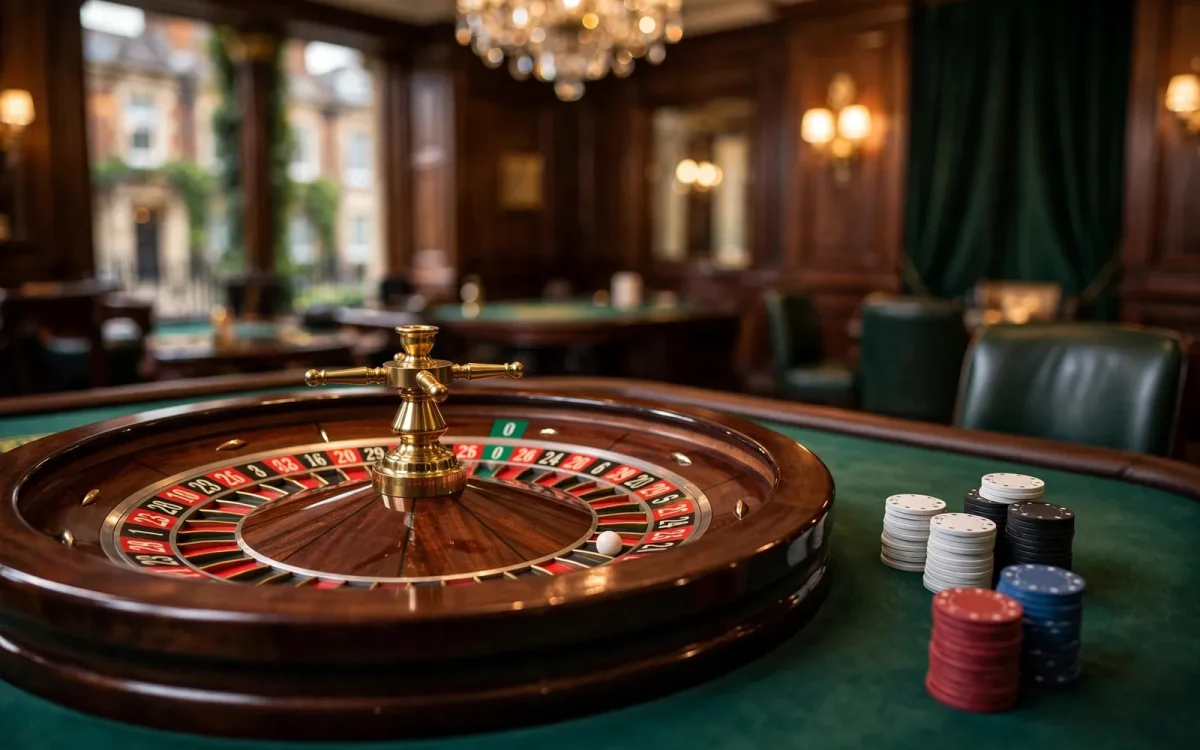
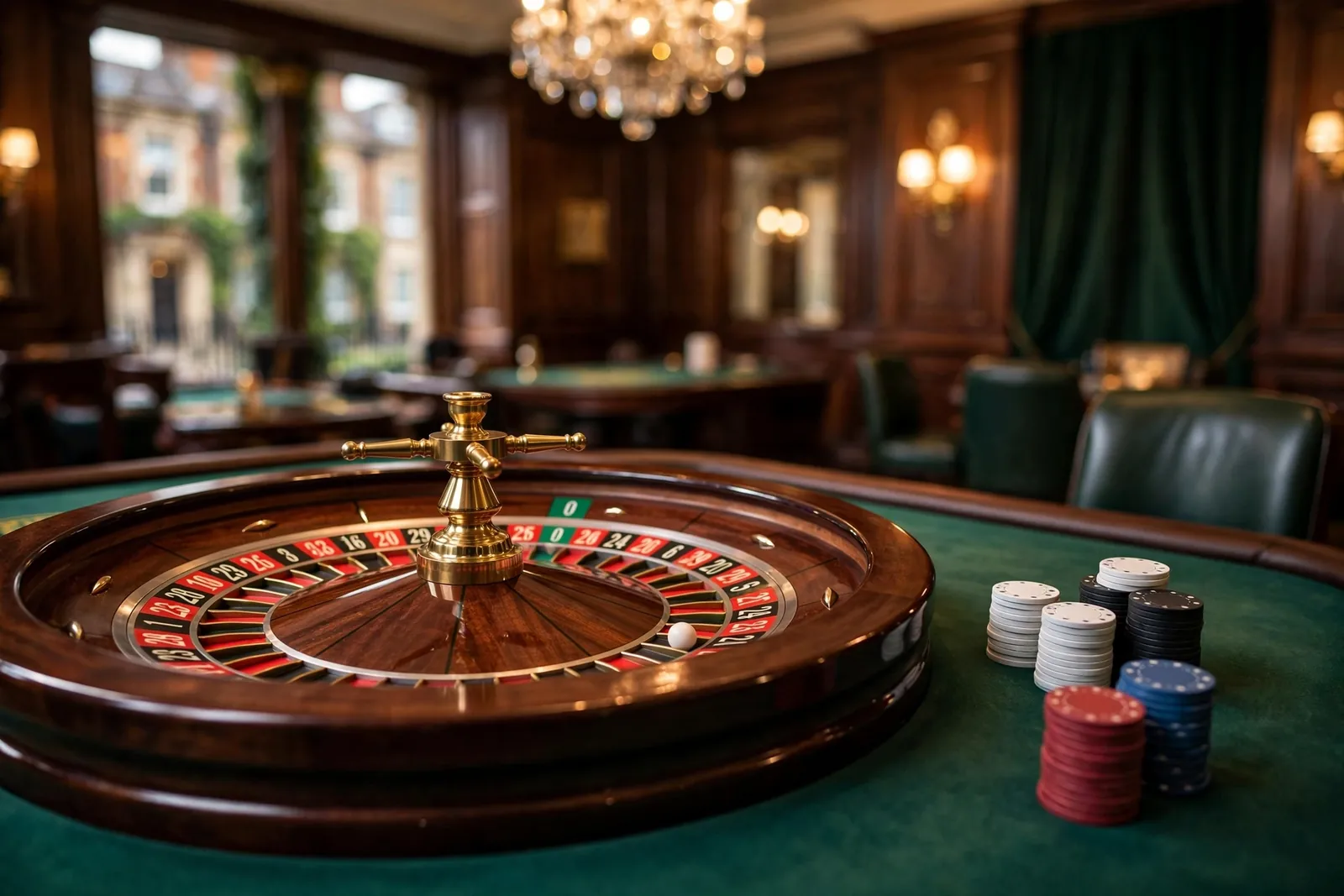
European roulette is built around a wheel with numbers from one to thirty-six and a [single green zero](https://www.redrakegaming.com/roulette/roulette-european/): thirty-seven pockets in total. That extra pocket is not a decorative feature or a neutral part of the numbering. It is what gives the casino its mathematical advantage over the standard set of outcomes.
The distinction is easy to lose when the game is viewed only through its table layout. A player selects an outcome, the wheel turns, and the ball settles into a pocket. The result is then compared with the selection. But the wheel does not divide into only the familiar numbered outcomes. The zero sits outside the red-and-black sequence and changes the calculation behind every standard European roulette wager.
I have found that this is where the word “fair” can be misleading. The game can apply the same published rules to every player and still be designed with an advantage for the house. Fair dealing describes how the game is run; it does not mean that the player and casino have identical long-term expectations. The mechanics are transparent. The expectation is not even.
The house edge for European roulette is 2.70%. This is a theoretical measure of the casino’s advantage over a large volume of play, not a fee taken from each individual stake. A single result can go either way, and a short session may look nothing like the long-run expectation. The percentage describes the structure of the game across repeated outcomes; it does not forecast the next spin or set a guaranteed result for any particular player.
That distinction matters because roulette can feel more predictable than it is. The wheel is visible, the pockets are fixed, and the rules do not change from spin to spin. Those features make the game legible, but they do not make the next landing knowable. A previous result does not alter the wheel’s pocket count. A run of one colour, a sequence of numbers, or a period without zero does not change the physical set of possible outcomes on the following spin.
$$LINKCARD online-casino-tournaments-uk$$
In [online European](/casino-games/online-casino-games-for-real-cash-uk/) roulette, the presentation may differ, but the defining structure remains the single-zero wheel. The game’s name refers to that format, not to a guarantee about how a particular session will unfold. An online casino may show the wheel in different ways, yet the essential calculation comes from the same set of thirty-seven pockets and the same house edge when standard European rules apply.
“Fixed odds” also needs a precise reading. The game’s rules and stated returns are set for the format; they do not move in response to a player’s history. That does not make a result fixed in advance. Each spin produces an uncertain outcome, while the underlying advantage remains built into the relationship between the available outcomes and the game’s returns. It is the framework that is fixed, not the landing.
The zero has a practical effect beyond its colour or position. It is a valid result in its own right, and it is not covered by the ordinary red-and-black division. This is why the single-zero structure matters even to someone who never selects the zero directly. The house edge comes from the full wheel, rather than from a special charge attached only to one type of selection.
When I assess a roulette description, I separate three ideas that are often blended together: the number of pockets, the outcome of an individual spin, and the long-run house edge. The pocket count describes the wheel. The spin is a chance event. The edge describes the average mathematical balance over repeated play. Confusing these makes ordinary swings in results look like evidence that the game has changed.
A European roulette casino may present the game as classic, smooth or simple. Those are descriptions of presentation, not of the underlying probability. The useful baseline is more modest: a single-zero wheel, numbers from one to thirty-six, and a 2.70% house edge under standard rules. Everything else in the experience sits on top of that structure.
::: info-callout
European roulette is defined by a single-zero wheel with 37 pockets and a theoretical house edge of 2.70% under standard rules.
:::
This is not a prediction tool. It is a definition of the game’s built-in terms. Once those terms are clear, the word “European” stops sounding like a broad label and becomes a specific wheel format. The casino advantage is small enough to be easy to overlook in a short session, but it is still part of the rules from the first spin. Clear mechanics. No promised outcome.
## A Single-Zero Table: What the Layout Changes
On a European roulette table, the numbered betting area runs from 1 to 36, with a separate green zero. That arrangement reflects the single-zero wheel: 37 pockets in total. The layout is not a picture of the wheel in sequence. It is a working grid, with numbers arranged in three columns so that bets can be placed on individual numbers or groups of numbers.
The distinction between inside and outside bets is mainly about where a selection sits on that grid and how much of the numbered field it covers. Inside bets are placed on numbers or smaller groups within the grid. Outside bets sit around its edges and apply to broader categories. The zero remains apart from those numbered groupings. It is neither red nor black, neither odd nor even, and belongs to neither the low nor the high numbers.
That separation is the point that can be easy to miss when looking at a European roulette single-zero table layout. A red bet covers the red numbers, not every pocket that is not black. The green zero is outside both colours. So when the ball lands there, a standard even-money selection such as red, black, odd, even, low or high loses. The bet may appear to cover a large share of the table, but its coverage is not the whole wheel.
$$LINKCARD french-roulette-online-casino-uk$$
The same logic underlies the standard house edge. A single-zero wheel gives the casino one pocket that sits outside the numbered even-money categories. Across ordinary play, that pocket is why those bets do not return their full stake in every losing case. The 2.70% European roulette house edge is the baseline for the standard game; it is not a separate fee shown on the layout or deducted from each wager.
La Partage changes what happens to an even-money bet when zero appears. Instead of losing the entire stake, the player gets half of it back. The bet still loses, but the loss is smaller. For those even-money bets, that rule reduces the house edge to 1.35%. It does not change the wheel or make zero part of red, black, odd or even. It changes the settlement attached to that one outcome.
From the counter, that distinction matters more than the colour of the felt. A layout shows where selections are made; the table rules determine what those selections mean when the ball lands on zero. Two tables can display the same single-zero grid while treating an even-money loss differently if one applies La Partage and the other does not. The rule should therefore be read as part of the game’s conditions, not inferred from the printed betting area.
::: details La Partage Rule
This rule reduces the house edge to 1.35% for even-money bets. If the ball lands on zero, the player receives half of their stake back instead of losing the entire bet.
:::
A single zero is still a losing result for a standard even-money bet where La Partage does not apply. Where it does, half the stake is returned on zero. That is the practical difference between the wheel’s structure and the table’s settlement rule. One is fixed by the pockets. The other is a condition of play.
## Reading the Table: Bets and Payouts
A European roulette table separates bets on individual numbers from bets covering broader groups. The numbered grid is the area for inside bets; the marked spaces around it are for outside bets. Each chip placement identifies the selection. A chip on a number is different from one placed across a boundary, even when the two positions look close.
An inside bet can cover a single number, a pair of adjacent numbers or a horizontal row of three. On a European table, a straight-up bet selects one number and pays 35:1. A split bet straddles the line between two neighbouring numbers and pays 17:1. A street bet sits at the end of a horizontal row and covers its three numbers, paying 11:1. The position matters: the chip has to sit on the number or line that represents the intended selection.
That is the practical detail often hidden by a neat-looking European roulette table layout on screen. The betting grid is not decoration; it is an interface. A misplaced chip can represent a different selection, so the bet indicator or highlighted area should be checked before the betting window closes. On a digital table, the same principle applies whether chips are dragged into place or selected through a menu.
$$LINKCARD online-casino-without-id-uk$$
Outside bets sit in labelled areas beyond the numbered grid. Red or black, odd or even, and low or high cover broad groups rather than a specific pocket. These bets pay 1:1. Their larger coverage does not mean they cover every possible result: zero is outside the red/black, odd/even and high/low categories. That distinction is visible in the labels and is easy to overlook when a table is viewed at a small scale.
The table’s layout makes the type of wager legible, but it does not change what a payout means. A quoted ratio describes the return attached to a winning selection; it is not a promise that the selection is likely to land. Inside bets offer a more concentrated choice, while outside bets group outcomes. Different coverage, different payout.
I have found it useful to read the bet area before placing anything, rather than infer a selection from where a chip seems to land. The European roulette casino table may be presented in a compact mobile view, but the boundaries still do the work. Check the marked selection, then the displayed odds. Small distinction. Big difference.
## Playing Roulette Without Treating a System as an Edge
When I look at a roulette staking plan, I separate the way it organises bets from what it can actually change. A system may determine when a stake rises, falls or stays level. It cannot influence where the ball lands. Each spin is governed by chance, so a sequence of earlier results does not give a strategy a reliable way to predict the next one.
::: warning-callout
No staking system or betting sequence can influence where the ball lands or provide a reliable way to predict the next outcome.
:::
That distinction matters when playing European roulette online. A run of losses can make a plan feel as though it is building towards a correction: the next win is expected to recover what went before. But the wheel does not keep a record of unpaid expectations. The apparent pattern belongs to the player’s account of events, not to the next spin.
Martingale makes the logic visible. After each loss, the player doubles the next bet, aiming for a win to offset the accumulated losses and leave a small gain. The arithmetic works only under conditions that real play does not guarantee. A losing streak can continue, and every step in the sequence asks for a larger stake. The bankroll can come under pressure before the hoped-for win arrives; a table limit can also prevent the next planned increase.
A system does not remove risk. It changes where that risk sits. With Martingale, modest wins may be frequent, while a prolonged losing run can create a much larger exposure. That imbalance is easy to overlook when attention stays on the last recovery rather than on the stake required to continue. The plan has no protective force of its own.
I have seen the same mistake in simpler forms: treating a colour that has appeared repeatedly as “due” to change, or assuming that a recent result makes another result less likely. Neither idea supplies information about the next outcome. Roulette odds are determined by chance; no staking method can forecast the final result. A sequence may look meaningful after it happens. Before the spin, it is not a signal.
$$LINKCARD online-bingo-uk$$
This applies whether the session involves real stakes or a free-play version. Practice can help someone understand the interface and the rhythm of placing a wager, but it cannot demonstrate that a betting sequence will produce an edge. A run of favourable results in a short session is not proof that a system works. Nor does a losing run prove that the next spin is more likely to rescue the balance.
The useful role of a plan is narrower: it can set a stopping point, keep decisions consistent, or prevent an impulsive increase after a loss. Those are controls over behaviour, not over the wheel. If a plan depends on continually raising stakes until a win arrives, its weakest point is precisely the moment when the player has least room to continue.
That is the distinction I keep in view when deciding how to play European roulette. A staking system can describe what happens to the next bet. It cannot make that bet more likely to win. The wheel remains indifferent.
## European or American Roulette: The Extra Zero Has a Cost
The practical difference between European and American roulette is visible before the first spin: the wheels do not have the same number of pockets. European roulette has one green zero alongside numbers 1 to 36. The American wheel adds a second green pocket, marked 00, making 38 in total.
::: card-grid
### European Roulette
Features a single-zero wheel with 37 total pockets and a house edge of 2.70%.
—
### American Roulette
Includes both a 0 and 00 pocket, totaling 38 pockets, which increases the house edge to 5.26%.
—
### Triple-Zero Roulette
Some tables feature a 000 pocket, which can result in a house edge as high as 7.69%.
:::
That extra pocket changes the odds without changing the familiar layout of red and black numbers. A standard even-money bet on the American wheel still pays even money, but the additional losing result makes the house edge 5.26%, compared with 2.70% on European roulette. The payout has not improved to compensate. The difference sits in the chance of a win.
In an online European roulette casino game, the single-zero wheel is therefore the lower-edge choice between these two standard versions. The American game may look much the same on screen, but its double zero is not a cosmetic variation. It affects every spin and should be included in any comparison of the displayed rules.
There is a further complication with some American tables available through UK online casinos: a third green pocket marked 000. A specialist review has reported tables with this layout and a house edge of 7.69%. That should be treated as a specific reported format, not as a defining feature of American roulette. The table rules and wheel image need to match.
One American bet is more costly still. The basket bet covers 0, 00, 1, 2 and 3; its house edge is 7.89%. The broader coverage can make it look like a natural way to spread risk, but its payout does not offset the odds. More numbers covered does not mean a better-value bet.
When comparing [European roulette vs American roulette](/casino-games/online-casino-american-roulette-uk/), the useful check is not the game title alone. Confirm the wheel’s green pockets and the stated rules for the table. For a player choosing between otherwise similar games, the single-zero version has the lower house edge. The difference is built into the wheel.
## What “Best” Means for a UK Roulette Casino
::: top-operators
When choosing a UK online casino for European roulette in 2026, payout timing is one practical detail to check alongside the game itself. This list gives a brief reference point on the payout information available for each operator.
### 1. Amunbet
**Payout speed:** 1-3 business days
Amunbet lists a payout speed of 1–3 business days, a useful detail to consider when looking at European roulette options.
—
### 2. Dieselwin
**Payout speed:** 1-3 business days
Dieselwin lists a payout speed of 1–3 business days. That is the available payout information relevant to this European roulette shortlist.
—
### 3. Zombillion
**Payout speed:** 1-3 business days
Zombillion lists a payout speed of 1–3 business days, giving readers a stated timeframe to factor into their choice.
—
### 4. BeOnBet
**Payout speed:** 1-3 business days
BeOnBet lists a payout speed of 1–3 business days. This provides a clear payout detail for readers considering its European roulette offering.
—
### 5. NightLuck
**Payout speed:** 1-3 business days
NightLuck lists a payout speed of 1–3 business days, the available practical detail for readers reviewing it for European roulette.
—
### 6. Jetsetspins
**Payout speed:** 1-3 business days
Jetsetspins lists a payout speed of 1–3 business days. Readers can take this stated timeframe into account when considering the operator.
—
### 7. x3bet
**Payout speed:** 1-3 business days
x3bet lists a payout speed of 1–3 business days, providing a payout-related reference point for European roulette players.
—
### 8. Britsino
**Payout speed:** 1-3 business days
Britsino lists a payout speed of 1–3 business days. This is the available factual detail to consider when reviewing it for the page topic.
—
### 9. SlotoSport
**Payout speed:** 1-3 business days
SlotoSport lists a payout speed of 1–3 business days, a practical detail for readers weighing their European roulette options.
—
### 10. Revery Play
**Payout speed:** 1-3 business days
Revery Play lists a payout speed of 1–3 business days. The stated timeframe offers a concise payout detail for readers considering the operator.
:::
“Best” is often used as if it were a measured property of a casino. In practice, it hides several separate decisions: whether the operator is entitled to serve British customers, whether its roulette information is clear enough to assess, and whether its account terms fit the way the game is played. I would not turn those checks into a ranking. A polished lobby cannot compensate for a missing licence or an RTP figure that cannot be found.
### Start with the licence
The UK Gambling Commission (UKGC) is the sole regulator of online casino activity in Great Britain. Remote operators offering gambling to customers there must hold the relevant UKGC licence, wherever the business itself is based. A foreign address or an English-language website does not change that requirement. Platforms without a valid UKGC licence cannot legally offer real-money live roulette to British residents.
A licence is not a decorative badge. It places the operator within the British regulatory system, with obligations covering how gambling is offered and how customer protections are handled. Before depositing, the licence number should be checked against the UKGC public register. The name shown on the register should correspond to the business operating the casino, rather than merely to a games supplier or a related brand.
::: pre-bet-checklist Check Casino Legitimacy
– [ ] Verify the operator holds a valid UKGC licence
– [ ] Cross-reference the licence number with the UKGC public register
– [ ] Ensure the operator name matches the registered business
– [ ] Confirm age verification is completed before depositing
:::
Age verification is another practical part of this framework: operators must verify a customer’s age before allowing funds to be deposited into a gambling account. That is a basic eligibility check, not a feature that makes a casino more generous or more enjoyable. It is one of the conditions of operating legally.
### Make RTP information findable
For European roulette, published RTP information matters because it helps explain the game’s theoretical return over time. The figure should be accessible for the specific roulette game, not buried in a general statement about the casino’s entire catalogue. If a lobby shows several versions of roulette, the information needs to make clear which version it describes. A number without that context is hard to use.
I treat accessibility as part of the operator assessment, not as fine print to ignore. Look for the game’s help or rules panel and for a clear explanation of the return information associated with that title. If the figure is absent, difficult to locate, or presented without identifying the game it applies to, that is a transparency weakness. It does not change how the wheel works; it changes how much can be established before play.
The same discipline applies to labels. “European roulette” should identify a table game with a wheel and betting layout, not a roulette-themed slot. A search result or lobby tile can blur those categories, especially when a slot borrows roulette imagery. The game rules and format should settle the distinction. Marketing language is not a specification.
$$LINKCARD live-dream-catcher-casino-uk$$
### Read the protections as part of the offer
UKGC-licensed casinos must provide safer-gambling controls, including deposit limits, loss limits, session time reminders, reality checks, cool-off periods and GamStop self-exclusion. These tools are part of the regulated offer, not optional extras to infer from a responsible-gambling logo. Their presence and accessibility tell more than a broad claim about “player care”.
New customers must be prompted to set a financial limit before making their first deposit, and account-level limit controls must remain accessible. Operators must also provide an internal complaints process and access to an approved Alternative Dispute Resolution service. Those routes matter when a dispute concerns account handling or a transaction: the operator should explain how to raise a complaint and what independent route is available if it remains unresolved.
Payment conditions are another point worth understanding before an account is funded. UKGC licensees cannot accept credit cards for gambling, including credit-card funding routed through a money service business. A wallet cannot be used where it allows credit-card funds to be spent on gambling. A payment logo alone does not tell the whole story; the funding source and the operator’s rules matter.
I have seen “trusted” used as a shortcut for this kind of scrutiny. It is not a test. A sound assessment is more concrete: current UKGC authorisation, identifiable roulette rules and RTP information, visible account controls, and clear complaint procedures. Those checks do not promise a better result at the wheel. They establish whether the casino is operating within the British framework and whether its terms can be examined before play. That is the useful distinction.
::: dos-donts
#### Do
– Use UKGC-mandated deposit and loss limits
– Check for clear RTP and game rules
– Use approved ADR services for disputes
—
#### Don’t
– Use credit cards for funding gambling accounts
– Trust labels like “trusted” without verification
– Ignore the specific terms of a game’s RTP
:::
## Choosing Between RNG and Live Roulette
The main difference is how each spin is produced. RNG roulette uses a random number generator to simulate the result; live roulette shows a physical wheel turning on a streamed table. Both can offer European roulette, but the experience around the game is not the same. One is software-led and quick to move between spins. The other follows the pace of a real table.
I have found that the choice is less about which format is “better” and more about what the pace does to a session. In RNG play, a spin can be completed without waiting for a dealer or a ball to settle on camera. That makes it easier to move through rounds quickly. It also makes it easier to lose track of how often bets are being placed. Fast is not neutral.
A live stream makes the table feel more legible: the wheel and ball are visible, and the dealer’s actions are part of the experience. The trade-off is that each round takes time to unfold. That can suit someone who prefers to watch the process rather than move straight from one result to the next. It does not change the underlying chance of a result.
### Minimum stakes depend on the format
RNG roulette can be available with small minimum stakes, sometimes as low as 10p. A low entry point changes how little can be risked on a single spin; it does not make the game more predictable. Table minimums vary by format and operator, so the displayed limit matters more than the game’s label.
$$LINKCARD best-online-slots-payout-percentage$$
The available minimums can differ even among versions that do not use a conventional live dealer. A specialist review reports UK live roulette tables with minimums beginning at 10p, while auto-roulette and speed roulette formats can begin at 5p. These are reported starting points, not a promise that every casino offers them. The specific table sets the terms.
That distinction matters when a lobby groups several games under “European roulette”. The label identifies the variant, not necessarily whether the result is generated by software, shown from a physical wheel or produced by an automated setup. The screen presentation and the minimum stake are separate choices.
I would compare the pace and the table limit before treating either format as a default. RNG may suit a shorter, faster sequence of decisions; a live stream gives each round more visible structure. Neither format supplies an advantage over the other. The practical difference is how quickly play moves and how much can be staked at the chosen table.
For anyone trying to keep a session measured, speed deserves attention alongside the minimum. A small stake can still add up when rounds come quickly. Conversely, a slower stream is not a safeguard against losses; it simply spaces out the decisions. I prefer to treat the displayed minimum as a boundary for one bet, not as a guide to how long a session should run.
Same wheel variant. Different tempo.
::: key-takeaways RNG vs Live Roulette
– RNG roulette offers faster play and lower minimum stakes (sometimes from 5p or 10p).
– Live roulette provides a visible physical wheel and a slower, dealer-led pace.
– Neither format provides a mathematical advantage over the other.
:::
## Free Play, Real Money and Bonus Contribution
A free European roulette demo and a real-money table can look almost identical. The difference is what is at stake: demo chips have no cash value, while real-money play uses a gambling balance and produces wins or losses that affect it. Practice mode can help explain the interface, but it cannot reproduce the financial consequences of a real session.
Bonus funds add another layer. A promotion may set wagering requirements, meaning qualifying bets must be made before the bonus or related winnings can be withdrawn. Roulette’s game weighting determines how much each qualifying stake counts towards that requirement. It is not a measure of the roulette game’s odds, and it does not make a bet more likely to win.
That can make roulette a slow way to clear a requirement. A stake may count for only part of its value, so the displayed balance and the progress towards completing the terms are separate figures.
The rate is not uniform across formats. A specialist review reports live roulette at either 10% or 20% game weighting, while RNG roulette may receive full weighting at 100%. Those are reported examples, not a rule that applies to every operator or offer. The promotion’s own terms control; they may treat live and software-generated tables differently, or exclude a format altogether. “Eligible games” is the phrase to read closely. It does not necessarily mean every roulette table qualifies.
$$LINKCARD chicken-road-casino-game-uk$$
A specialist review also reports that, from January 2026, UK regulations cap wagering requirements at 10x for all licensed operators. The cap limits the size of the requirement, but it does not turn bonus funds into cash or remove other conditions. Game weighting still matters: a low contribution rate can mean that roulette play advances the requirement more slowly than the headline multiplier suggests. Read the specific offer terms alongside the cap.
Demo play sits outside this calculation. It does not complete wagering requirements, and practice results do not carry over into a real-money balance. Conversely, real-money roulette may count towards a promotion only when the applicable terms allow it. A free table is useful for learning where controls sit; it is not a rehearsal of how a bonus behaves under cash stakes.
I treat the stated weighting as a condition, not a selling point. The practical question is how the qualifying game list, contribution rate and wagering cap work together. Small print, plainly.
## Live Dealer Roulette: The Physical Wheel on Screen
[Live dealer roulette](/casino-games/live-roulette-uk-with-english-speaking-dealers/) puts a real wheel, a human dealer and the physical movement of the ball on a studio feed. Bets are entered through the online table interface, but the result comes from the wheel shown on screen rather than a random number generator. That distinction is the point of the format: the spin is visible, while the betting still happens digitally.
From working around casino products, I have found that the studio presentation changes how a round feels more than how roulette works. The dealer manages the table, announces the result and prepares for the next spin. The camera gives the round a shared, public rhythm; it does not make an individual outcome more predictable. The wheel remains the wheel.
::: info-callout
Speed roulette can reach over 150 spins per hour, whereas standard live tables typically range between 80–100 spins per hour.
:::
Pace is part of that trade-off. A specialist review puts speed roulette at more than 150 spins an hour, against 80–100 at a standard table. Those are reported format figures, not a promise that every live table will run at the same rate. A conventional studio game leaves more room for the dealing and betting sequence; speed roulette trims that interval. Faster is not automatically better. It means decisions and exposure can accumulate more quickly.
The stream also depends on a stable connection and a clear view of the table. A delay or interruption can make the sequence harder to follow, which is why the interface’s current betting status matters alongside the video. Production polish is presentation, not a change to the underlying game.
The legal boundary is straightforward in Britain: a platform without a valid UK Gambling Commission licence cannot legally offer real-money live roulette to British residents. UKGC-licensed live casino operators must provide safer-gambling controls, including deposit and loss limits, session time reminders, reality checks, cool-off periods and GamStop self-exclusion. These are account tools, not features of the wheel, and they remain relevant even when a studio stream makes play feel social.
I treat a live European roulette table as a viewing format with a physical result, not as a more transparent route to better outcomes. The dealer can make the process legible; the stream cannot disclose where the ball will land. A visible wheel, still chance.
## Roulette-Branded Slots Are Not Table Roulette
A roulette image on a [game tile](/casino-games/) does not make the game a roulette table. The distinction is in what determines the result. In table roulette, a bet is placed against a wheel outcome. A roulette-themed slot uses slot-game rules, even when its graphics borrow the wheel, colours or number labels. The title and artwork are not enough to establish how a game works.
$$LINKCARD best-keno-online-casino-uk$$
That matters for searches describing a three-dimensional European roulette slot, or using labels such as “Gold” and “Platinum”. Those words can be part of a product name or presentation; by themselves, they do not confirm that the game has a physical-style wheel, table bets or the payout structure of European roulette. I have seen the same confusion arise when a familiar casino term is used as a theme. Branding is not the rules.
The clearest check is the paytable and the game description. A table game sets out bets against roulette outcomes. A slot’s rules explain its own symbols, features and prize conditions. If the displayed rules do not describe a roulette wheel and table bets, it should not be treated as European roulette simply because the screen looks the part. No shared odds follow from a shared visual theme.
[Lightning Roulette](/casino-games/live-casino-lightning-roulette-uk/) shows why the distinction can matter even when a game is presented as roulette. A specialist review reports that a straight-up bet without a lightning multiplier pays 29:1, rather than the 35:1 associated with a standard straight-up roulette bet. That is a material difference in the stated return for that bet. A player comparing games by name alone could miss it.
The same review says Lightning Roulette’s outside bets retain standard roulette odds. That does not make every part of the game identical to a conventional table: the straight-up payout detail already shows otherwise. The specific bet and its stated terms matter more than the broad label.
I would treat “roulette” in a slot title as a prompt to inspect the rules, not as evidence of table-game odds. A three-dimensional presentation may look more like a wheel; a Gold or Platinum label may sound like a variant. Neither phrase, without rules to support it, tells what outcomes are used or how wins are calculated. Read the paytable. Check the actual game. The name is decoration.
::: faq
## Should I play American or European roulette if I’m in the UK?
European roulette has the lower house edge: 2.70%, compared with 5.26% for standard American roulette. Some American tables with a 000 pocket have a 7.69% edge.
—
## What is the difference between European and American roulette wheels?
European roulette has 37 pockets: numbers 1–36 and one zero. American roulette has 38 pockets, adding a double zero; some UK online tables also have a 000 pocket.
—
## What is the house edge on European roulette compared to American roulette?
The standard house edge is 2.70% on European roulette and 5.26% on American roulette. The American basket bet has a higher edge of 7.89%.
:::
[Responsible Gambling](/responsible-gambling/)