

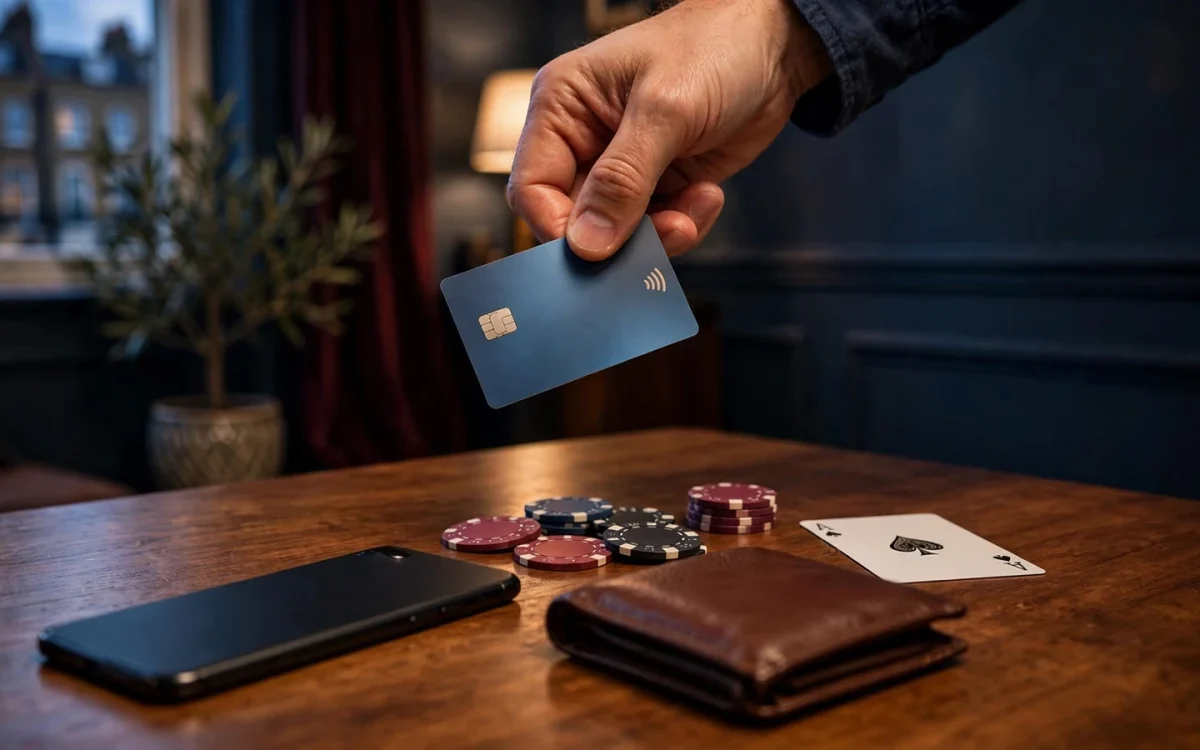
# UK Casino Sites That Accept Debit Cards
::: hero-subtitle
Find out what debit-card acceptance means at UK casinos and why deposits can arrive sooner than withdrawals.
:::
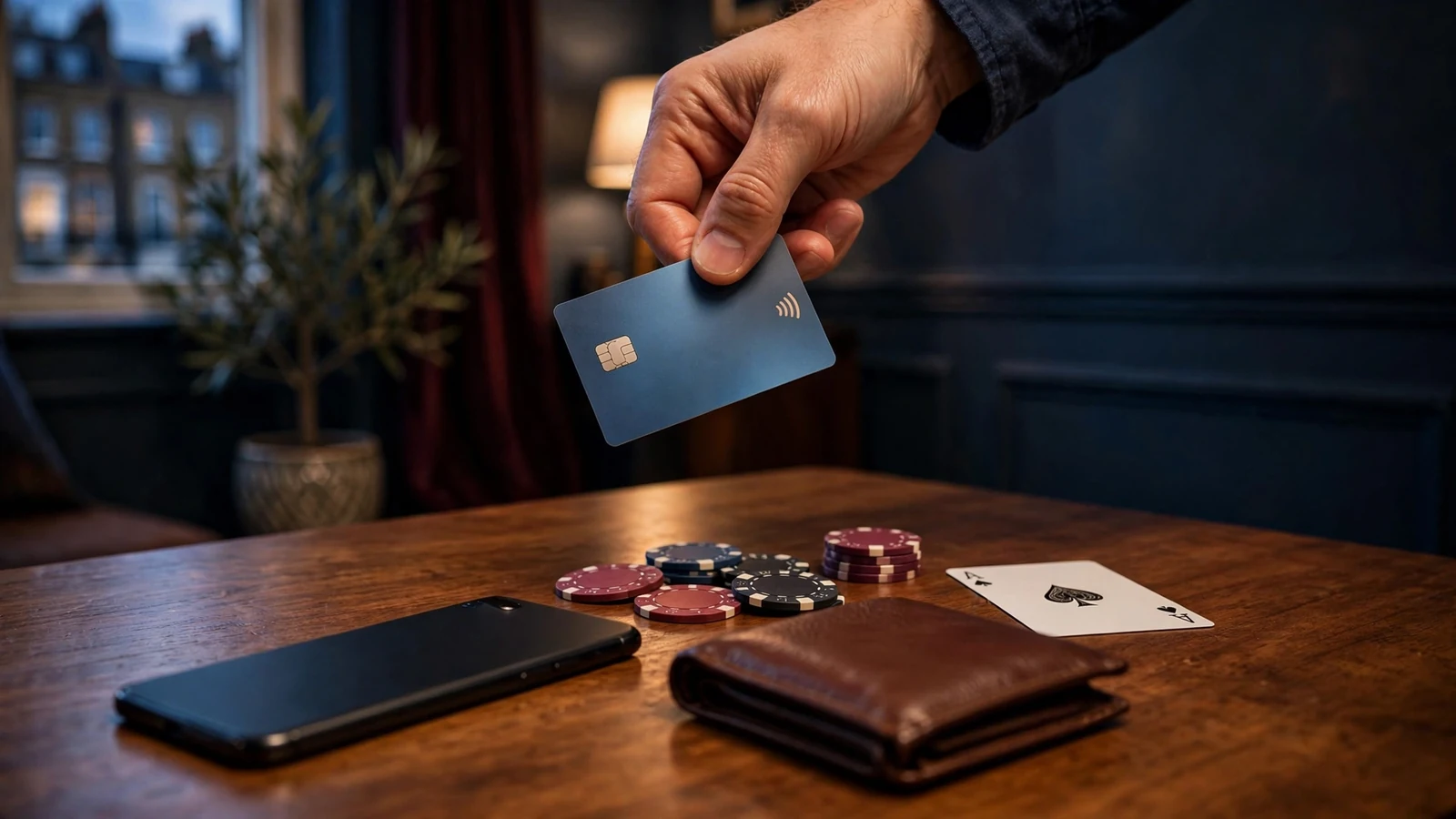
## How Debit Cards Fit into UK Casino Payments
Debit cards occupy a familiar place in the payment mix at UK casinos. They connect a gambling account to funds held in a bank account, so the transaction is made from money already available rather than from a borrowing facility. Visa and Mastercard [debit cards are commonly accepted](/payment-methods/casinos-that-accept-mastercard-uk/), which helps explain why card payments remain a recognised way to fund an account. That broad role does not make every card transaction identical, but it does make debit cards a useful starting point for understanding casino payments.
From the other side of the counter, I saw the payment method described as a simple choice in a cashier: select a card, enter the details and proceed. The distinction that matters most is not the shape of the card or the logo on its front. It is whether the payment is a debit transaction or a credit-card payment for gambling. Those categories are treated differently under UK rules.
The credit-card restriction is longstanding. The regulator banned credit-card gambling on 14 April 2020, and the rule has not been relaxed. Remote gambling licensees [cannot accept credit-card payments for gambling](/payment-methods/casino-sites-that-accept-credit-card-uk/), including credit-card funds routed through a money service business. Nor can a payment wallet be used where it allows credit-card funds to be used for gambling. Routing does not change the underlying source of money.
::: top-operators
When choosing a UK casino that accepts debit cards, check payout information as well as the payment method. This list notes the stated withdrawal timeframe for each operator.
### 1. Amunbet
**Payout speed:** 1-3 business days
Amunbet lists a payout speed of 1–3 business days, a useful detail to consider when reviewing debit card casino options.
—
### 2. Dieselwin
**Payout speed:** 1-3 business days
Dieselwin lists a payout speed of 1–3 business days. This gives readers a stated timeframe to factor into their choice.
—
### 3. Zombillion
**Payout speed:** 1-3 business days
Zombillion lists payouts at 1–3 business days, providing a clear timeframe to consider when assessing this option.
—
### 4. BeOnBet
**Payout speed:** 1-3 business days
BeOnBet lists a payout speed of 1–3 business days. That stated timeframe is the available point of note for this listing.
—
### 5. NightLuck
**Payout speed:** 1-3 business days
NightLuck lists a payout speed of 1–3 business days, which may help readers consider how withdrawals fit their needs.
—
### 6. Jetsetspins
**Payout speed:** 1-3 business days
Jetsetspins lists payouts at 1–3 business days. Its stated withdrawal timeframe is a practical detail to keep in mind.
—
### 7. x3bet
**Payout speed:** 1-3 business days
x3bet lists a payout speed of 1–3 business days, giving readers a specific withdrawal timeframe to consider.
—
### 8. Britsino
**Payout speed:** 1-3 business days
Britsino lists payouts at 1–3 business days. This stated timeframe is the available detail to note for the operator.
—
### 9. SlotoSport
**Payout speed:** 1-3 business days
SlotoSport lists a payout speed of 1–3 business days, a useful withdrawal detail for readers reviewing their options.
—
### 10. Revery Play
**Payout speed:** 1-3 business days
Revery Play lists payouts at 1–3 business days. Readers can take this stated timeframe into account when considering the operator.
:::
That rule is sometimes compressed in promotional copy into a broad statement that “cards are accepted”. The wording can hide an important distinction. A casino may accept a debit card while being unable to take a credit card for gambling. A card can also look similar to another at the point of payment while being linked to a different type of account. The relevant question is therefore the payment type, not simply whether the plastic carries a familiar network mark.
Debit cards are not the only route that may appear in a UK casino cashier. Some UKGC-licensed casinos accept Apple Pay for deposits, alongside card options. The wider mix may include other payment services, but the useful point here is that a casino can support more than one way to add funds without those methods being interchangeable. Each has its own role and its own rules; the presence of one option does not imply that all others are available.
This is why I would treat [“debit card”](/payment-methods/casinos-that-accept-debit-card-uk/) as a category rather than a promise about a particular transaction. A card payment draws on the customer’s bank funds, while credit-card gambling is prohibited for UK-licensed operators. The difference is regulatory as well as practical. It shapes what remote gambling licensees can accept, and it prevents a credit-funded payment from becoming permissible merely because it passes through another service.
$$LINKCARD payment-methods$$
The ban also reflects a separation between spending available money and borrowing to gamble. That distinction should not be stretched into a claim that debit-card use is risk-free. A debit payment can still represent gambling expenditure, and a card’s connection to a bank account does not say anything about whether the activity suits someone’s circumstances. The payment method describes how funds are supplied, not the outcome of play or the level of financial risk.
In the UK, online gambling is legal only through licensed and regulated sites. Remote gambling licensees serving Great Britain consumers [must hold the relevant Gambling Commission licence](https://www.gamblingcommission.gov.uk/guidance/guidance-to-licensing-authorities/part-1-primary-legislation), regardless of where the business is based. The payment rules sit within that regulated framework: a debit-card option is one part of the account’s funding arrangements, not a substitute for the operator’s obligations.
The practical distinction is plain. Debit cards are a common casino payment route; credit-card payments for gambling are barred. Other deposit methods, such as Apple Pay at some licensed casinos, broaden the available mix, but they do not erase that line. A familiar logo is not the whole story. The funding source matters.
## What Casino Card Acceptance Actually Means
A card logo on a casino’s payment page is evidence that the operator lists a network, not a promise that every card carrying that logo will be accepted. The distinction matters because “accepts debit cards” can describe a payment option at site level while saying little about whether a particular card product is available to a customer in the UK at the moment of deposit.
::: info-callout
A network logo in a review is a lead, not a confirmation. The live cashier is the practical check for current payment method availability.
:::
A specialist review may report that a casino supports Visa or Mastercard, but that summary can become outdated or leave out product-level conditions. The live cashier is the practical check: it shows the payment methods the operator is currently presenting for the account and transaction. I treat a network logo in a review as a lead, not as confirmation. The cashier is closer to the actual decision point.
There are several layers between a payment logo and a completed deposit. The casino must have the relevant method enabled for the customer’s location; the card product must be eligible; and the transaction must pass the checks made by the operator and payment chain. A debit card and a credit card can display the same network mark, for instance, without having the same eligibility for gambling payments. The logo alone does not identify the underlying product.
This is why a general statement that an online casino accepts debit cards cannot settle whether a specific card will work. The card may be linked to an account, issued under a particular product, or presented through a payment route that the cashier does not support. Availability can also be presented differently after signing in than on a public payment page. These are not necessarily signs of a fault; they reflect that a published list is broad, while a cashier is configured for an actual account and transaction.
I have seen payment descriptions treated as if they were guarantees. They are not. “Available” may mean the method is listed, while successful use still depends on the exact payment details and the checks applied at the time. A deposit attempt can therefore fail even when the network appears on the site’s information page. Conversely, the payment option shown in the cashier is a more useful indication than a generic list, though it still cannot promise that every attempted transaction will be authorised.
$$LINKCARD casino-sites-that-accept-ecopayz-uk$$
The sensible check is narrow and current. Sign in, open the cashier, and look for the debit-card option presented there before relying on a third-party description. Check that the method is offered for the account and that the payment screen identifies the card type being used. If the cashier does not show the method, an old page or logo elsewhere on the site does not establish that it is currently available. If the screen is unclear, the operator’s own payment information can clarify the stated conditions.
A card being visible in the cashier is not the same as approval from the card issuer. The operator’s interface can show that it accepts a type of payment, but the transaction still has to be processed. That is the point at which a particular card or payment attempt may not proceed. The practical distinction is between method availability and transaction acceptance: one is shown by the cashier, the other is established only when the payment completes.
It also helps to keep basic account ownership consistent. When the casino account details and payment route belong to the same customer, there is less scope for a mismatch in ownership information to create avoidable friction. That does not turn a listed card into an accepted one, nor does it override the cashier’s current options. It removes one preventable complication from the process.
For a comparison of casino sites that accept debit cards, the useful question is therefore not simply whether a review names a card network. It is whether the operator currently presents a suitable debit-card option in its cashier for the customer’s UK account. A network logo is a starting point. A current cashier entry is stronger evidence. Neither should be stretched into a guarantee about every card product or every transaction.
::: dos-donts
#### Do
– Check the live option in the cashier
– Rely on the actual transaction result
—
#### Don’t
– Read “card accepted” as “all cards accepted”
– Treat payment summaries as guarantees
:::
That distinction is easy to miss in short payment summaries, where one logo can stand in for several different conditions. From the operational side, the wording is shorthand; it describes a supported route, not a universal promise. I would not read “card accepted” as “all cards accepted.” Check the live option. Then rely on the transaction result.
## Comparing Debit Card Deposits Without a ‘Best’ Claim
A debit card is not automatically the cheapest way to fund a casino account simply because the deposit appears straightforward. The amount that leaves a bank account can reflect more than the figure entered in the cashier: casino charges, payment-provider fees, issuer or bank fees, currency conversion and network costs may all affect the total. Comparing card deposits means checking which of those costs apply to the transaction, rather than relying on a “best” label.
I have found that the important distinction is between a cost shown plainly and one embedded in the exchange rate. A specialist review notes that a currency-conversion spread can outweigh a visible flat fee. That changes the comparison: a payment with no separately displayed charge is not necessarily cost-free if the account and card transaction use different currencies.
### Start with the account currency
The account currency is the first detail to establish. Specialist review material reports GBP as a supported currency on the pages it examined, but the currency offered can depend on the individual casino. It is worth confirming the account currency before making a first transaction. If the casino account is held in a different currency from the card account, conversion may enter the calculation.
$$LINKCARD casino-sites-that-accept-jeton-uk$$
There can be more than one point at which currency conversion matters. The casino may convert a deposit into the account currency, while a bank or card issuer may apply its own exchange rate or charge. The exact route depends on the transaction and the providers involved. A displayed deposit amount therefore does not, by itself, establish the final cost to the cardholder.
This is where a simple headline comparison can mislead. One cashier may state a fee clearly; another may show no separate fee while the exchange rate carries a cost. The meaningful comparison is the amount credited to the casino account against the amount ultimately charged to the bank account, with any stated fees considered alongside the rate.
### Separate each possible charge
A useful comparison keeps different charges distinct instead of treating them as one vague “payment fee”. The casino may impose a charge. The payment provider may have its own fee. A bank or card issuer may apply a charge, and a payment network may contribute a cost. If conversion is involved, the exchange-rate spread is another part of the picture.
Not every transaction will involve every category, and the responsible party may not be obvious from the cashier screen alone. Terms for deposits and payment charges, the card account’s fee information and the transaction confirmation can each show different parts of the cost. I would not assume that a charge is absent just because it is not displayed beside the deposit amount.
The actual deposit amount matters as well. A fixed charge and a percentage-based cost do not affect every transaction in the same way. That is a comparison principle, not a claim that a particular casino or provider uses either structure. The useful question is what the complete charge looks like for the amount being considered, rather than which payment method sounds cheapest in general.
::: warning-callout
**Attention:** A payment with no separately displayed charge is not necessarily cost-free if the account and card transaction use different currencies.
:::
There is no universal lowest-fee method. A specialist review’s comparison approach is to account for casino charges, provider fees, currency spread and network cost against the actual amount. That is more reliable than treating one fee line as the whole bill.
### Compare like with like
A fair comparison holds the key details steady: the casino account currency, the card account currency and the amount being deposited. If one option involves conversion and another does not, comparing only their visible charges leaves out a material difference. Likewise, a fee stated by one provider cannot be assumed to describe the cost of another card transaction.
The record of the transaction can help identify what happened. The cashier may show the amount requested or credited; the bank statement shows the amount charged; and the card or bank terms may explain an issuer-side fee. Those figures do not necessarily appear together in one place. Looking at them as separate parts makes it easier to see whether the difference came from a casino charge, a provider, the issuer or currency conversion.
It also keeps “free” in perspective. In payment copy, that word may mean no casino fee is listed, not that every party involved has waived every possible cost. The terms need to be read at the level they apply: casino, provider, bank or conversion. Small print matters.
For debit card deposits, then, the sound comparison is not a league table with a permanent winner. It is a transaction-level calculation using the currencies and charges that apply to the particular account and amount. A card option that costs less in one set of circumstances may not do so when the currency changes or a different fee applies. The total is what counts.
$$LINKCARD casino-sites-that-accept-skrill-uk$$
## Using a Debit Card for Casino Deposits and Withdrawals
A debit-card payment creates two linked records: the money entering the casino account and the source from which it came. That link matters again when a withdrawal is requested. The cashier is not simply a one-way channel for putting money in; its payment record helps determine how a payout can be sent back.
For a deposit, the card is selected as the funding method and the transaction is submitted through the casino’s payment process. Once the payment is accepted, the account balance reflects the deposit. The casino also retains information connecting that transaction with the payment source. From the player’s side, the sequence looks simple. Behind the cashier, the record is part of the account’s financial history.
A withdrawal begins differently. It is a request for the casino to release funds, not a reversal of the original card payment that happens automatically. The operator checks the account and payment history, then applies its payout procedure. A debit card used for a deposit may therefore be relevant to the withdrawal even if the two transactions appear as separate entries in the account.
The reason is control, not convenience. UK anti-money-laundering requirements commonly direct operators to send payouts back to the source used to fund the account. Returning money along the same route helps establish that the funds go back to the customer and payment source associated with the original transaction. It also reduces the scope for a casino account to be used as a pass-through between unrelated payment accounts.
::: info-callout
UK anti-money-laundering requirements commonly direct operators to send payouts back to the source used to fund the account.
:::
I have seen the payment route treated as part of the account’s identity, rather than as a preference that can be changed casually at payout time. A deposit made from one named account and a withdrawal requested to that same account give the operator a consistent record. That is generally the cleanest arrangement: one account, one route, and no unexplained change between funding and payout.
“Flexible withdrawals” can sound as if any destination is interchangeable. In practice, an operator may need to examine a different destination before releasing funds there. An alternative route can trigger additional checks because the original payment trail no longer matches the proposed payout destination. That does not mean an alternative is necessarily impossible; it means the operator may need more information before it can approve the change.
The same principle applies when a card is no longer suitable for receiving a payout. The casino still has to consider the source of the funds and the customer’s account record. Its cashier or support process may explain what route is available, but a different method should not be assumed to bypass the original-source rule. A request to redirect funds can require further verification.
This is why the withdrawal stage can feel less straightforward than the deposit stage. Depositing is a single action that adds funds to the balance. Withdrawing involves a request and a decision about where the money can properly be sent. The payment trail remains relevant after the deposit has cleared.
A useful way to read a cashier is as a record of the route, not merely a menu of buttons. The listed deposit method tells only part of the story. The withdrawal conditions explain whether the same source is expected to receive funds and what may happen if it cannot. Those conditions matter before a payment route is used, because changing it later can add checks.
$$LINKCARD casinos-that-accept-wirecard-uk$$
The details can vary by operator and by the circumstances of an account, so there is no safe assumption that every debit-card deposit will produce an identical payout process. The stable point is the link between source and return: UK anti-money-laundering controls commonly favour sending funds back through the original payment source, while a different destination may need extra scrutiny.
From the counter, the least complicated cases were the ones with a clear, continuous trail. A named account funded the casino balance, and the payout request followed that same route. Where the records diverged, the operator had a reason to pause and establish who controlled the destination. That is not a judgement about the customer; it is the payment control doing its job.
A consistent route leaves fewer questions at withdrawal. Less friction.
## Can a Debit Card Be Used for Online Gambling in the UK?
Yes. Debit-card payments for online gambling are permitted in the UK, and UK casinos commonly accept debit cards, including Visa and Mastercard. The key distinction is between a debit card, which draws on money held in a bank account, and a credit card, which lets the customer borrow money.
That distinction matters because the rules treat the two payment types differently. The regulator’s ban on credit-card gambling took effect on 14 April 2020 and remains in place. UK-licensed casinos cannot accept credit-card payments for gambling. The restriction also covers credit-card funds routed through a money service business, so changing the route does not make a prohibited payment acceptable.
::: danger-callout Credit-Card Ban
Remote gambling licensees in the UK cannot accept credit-card payments for gambling, including funds routed through a money service business.
:::
A debit card is not caught by that ban simply because it carries a familiar card-network logo. Its funds come from the account linked to the card rather than a credit facility. In practical terms, that means a debit card can be used to deposit at an online casino, provided the operator permits that payment and the transaction can be processed.
Permission is not the same as a guarantee that every transaction will succeed. The card issuer or payment route may affect whether a particular payment goes through, and individual casinos determine which methods they make available. That is an operational question, not a change to the UK rule on debit-card use. The rule is about the source of funds.
The legal setting also matters. In Great Britain, remote gambling licensees offering real-money gambling [must hold the relevant UK Gambling Commission licence](https://www.gamblingcommission.gov.uk/about-us/guide/what-we-regulate). Online gambling is legal for adults aged 18 and over when it takes place with a UKGC-licensed operator. A payment method’s availability does not itself establish that a casino is licensed.
From the other side of the counter, the confusion often came from treating “card payments” as one category. They are not. A debit-card transaction and a credit-card transaction can look similar at checkout, but the funding source determines which rule applies. The credit-card ban is firm; it has not been relaxed.
So a debit card may be used for online gambling in the UK, while a credit card may not be used for gambling at a UK-licensed casino. That answers the eligibility point. Whether a specific card is accepted at a particular cashier is a separate matter.
$$LINKCARD casinos-that-accept-bitcoin-uk$$
## Deposit Minimums and Account Limits
A debit-card deposit floor is not the same as an account spending limit. The first is the smallest payment a cashier will accept in one transaction; the second is a control applied to deposits over time. They can appear close together during registration, but they serve different purposes.
A specialist casino review reports that minimum deposits commonly fall between £10 and £20, with the exact entry point depending on the payment method. That is a guide to the range, not a promise that every debit-card cashier will accept the same amount. The amount displayed in the payment window is the operative one: a card option may have its own minimum, and an attempted deposit below it can be declined even when the account itself is active.
The upper end is separate. A specialist review also describes maximum deposits as variable across transaction, daily and monthly periods, with account status affecting the applicable ceiling. Those limits can therefore differ between payment methods and between customers at the same casino. A limit shown for one deposit does not necessarily describe the account’s total permitted deposits over a day or month.
This distinction matters when assessing casino sites that accept debit-card deposits. A low minimum says little about how much can be deposited later, while a high account limit does not mean a single card payment can reach it. The cashier and account controls set different boundaries.
There is also a regulatory control before the first payment. UKGC rules require remote gambling licensees to prompt new customers to set a financial limit before making their first deposit, and to make account-level limit controls accessible. This is not simply a cashier setting. It is a separate account safeguard, intended to let the customer define a boundary for gambling funds.
::: details Financial Limits vs Payment Limits
Payment limits govern what the transaction system will process, while account limits govern the customer’s chosen restriction. UKGC rules require operators to prompt new customers to set a financial limit before their first deposit.
:::
From the operator’s side, the figures are not interchangeable: payment limits govern what the transaction system will process, while account limits govern the customer’s chosen restriction. I have seen the distinction obscured by presenting both as “deposit limits”. The label is broad; the control is not.
For a debit-card user, the useful check is therefore the actual minimum and maximum shown for that payment route, alongside the account’s own financial limit. No single figure describes both.
## Why Card Deposits Can Be Instant but Withdrawals Take Longer
A debit-card deposit and a casino payout may use the same account, but they do not pass through the same process at the same speed. A deposit can be confirmed almost immediately when the payment is authorised. A withdrawal, by contrast, is first a request for the casino to release funds. It may wait for an internal check before the payment is sent.
In my experience, the word “instant” describes the deposit confirmation, not every stage of moving money. The cashier may update as soon as the payment is accepted, allowing play to begin. That does not mean a later payout will be approved or delivered just as quickly. The two transactions have different checks attached.
A specialist casino review reports that a card deposit can be instant while a withdrawal takes several business days. That is a reported outcome, not a timetable that applies to every operator or account. The time spent inside the casino matters: staff or systems may need to approve the request, and the process can take longer when the account has not completed verification.
$$LINKCARD casinos-that-accept-instadebit-uk$$
First withdrawals can therefore involve an extra wait while KYC is completed. Withdrawal speed also depends on whether the account is fully verified and how the casino handles its approval queue. A payout marked as pending may still be at this internal stage; it does not necessarily mean the card provider has already received it. Small distinction. Important one.
This is why searches for fast debit-card withdrawals do not settle the question of when money will arrive. A casino’s stated processing estimate may cover its own review, while the subsequent payment stage can add time. The cashier or withdrawal terms should make clear what the estimate refers to, although the actual timing still depends on account checks and processing.
The same separation matters when playing slots with a debit card: a quick deposit can fund a session, but it says little about the speed of a later payout. Deposit confirmation is one event. Withdrawal approval is another. A verified account removes one possible source of delay, but it does not turn the casino’s review into an instant step.
## Debit Cards and Casinos Outside GamStop
A casino described as “outside GamStop” may attract people looking for a debit-card payment option, but the label says nothing by itself about the operator’s regulatory position. Nor does a card logo establish that a site is suitable or authorised to serve customers in Britain. These are separate questions.
For remote gambling offered to customers in Great Britain, the operator [must hold the relevant UK Gambling Commission licence](https://www.gamblingcommission.gov.uk/about-us/guide/what-we-regulate), wherever the business is based. A site operating beyond the UKGC system does not hold that licence. The distinction matters: accepting a UK debit card is a payment-processing capability, not evidence of permission to offer gambling to British customers. Payment and status are not interchangeable.
::: warning-callout
Accepting a UK debit card is a payment-processing capability, not evidence of permission to offer gambling to British customers.
:::
I have seen cashier details treated as a shortcut for checking an operator. It is an unreliable shortcut. A card option can appear on a site without answering who runs it, which regulatory system applies, or whether the operator has the required UK licence. The regulatory position has to be considered independently of the deposit method.
The UK rule on credit-card payments for gambling is also distinct from debit-card use. The regulator introduced the credit-card restriction on 14 April 2020, and it remains in force. That does not turn every site accepting debit cards into a UK-licensed casino, or make an offshore operator part of the UKGC system. A debit card is not a licence.
“Not on GamStop” is therefore not a regulatory category that can replace checking the operator’s status. For real-money online gambling in the UK, legality depends on the applicable local licensing framework; in Great Britain, remote operators serving customers [must be licensed by the UKGC](https://www.gamblingcommission.gov.uk/guidance/guidance-to-licensing-authorities/part-1-primary-legislation). A payment method cannot change that requirement.
$$LINKCARD casinos-that-accept-upaycard-uk$$
The practical point is plain: card acceptance and regulatory status answer different questions. Neither should be inferred from the other. Short distinction.
## Visa Debit Cards: Check the Cashier Before Paying
Visa appears on many UK casino payment pages, and debit cards are commonly accepted across the market. That broad pattern is useful, but it does not confirm that a particular Visa debit card can be used at a particular casino. The payment page may name the network while leaving the eligible card products or current availability unclear.
Some specialist casino-review pages list Visa as an option, but a review is not a live check of an operator’s cashier. I treat the cashier as the practical test: once signed in, the deposit screen shows which methods are currently offered for that account and location. If Visa is absent there, a logo elsewhere on the site is not enough to establish that the card can be used.
$$LINKCARD casinos-that-accept-ideal-uk$$
Even when Visa is displayed, the card product matters. A Visa-branded debit card is not the same thing as every product carrying the Visa name, and an issuer may also affect whether a transaction proceeds. The cashier’s available options and any on-screen conditions are more relevant than a general payment-method list.
This is a small distinction with a real consequence. “Visa accepted” can sound like a blanket promise; in practice, it may describe the network, not every card or transaction. I would not infer acceptance from a casino’s general page alone. Check the deposit screen before relying on Visa, and confirm that the selected option is specifically suitable for the debit card being used. No assumption from the logo.
## Joining a Casino with a Debit Card: The Payment Details to Match
A debit card is only part of the account setup. The name and other account details should belong to the same person who owns the card. When those basics line up, there is less scope for avoidable friction over who made a transaction.
$$LINKCARD top-casinos-that-accept-direct-banking$$
I have seen payment checks treated as a consistency exercise: the casino account identifies a customer, and the payment route should point to that same customer. A mismatch does not, by itself, establish what will happen next, but it can make the transaction harder to process. The useful distinction is ownership, not simply whether a card network appears in a list.
The same principle applies when money leaves the casino. A named account used consistently for deposits and withdrawals is often the cleanest route. Switching between accounts can complicate the picture, even when each account is controlled by the same person. Consistency gives the payment trail a clearer shape.
“Easy sign-up” describes the form, not every later check. Account details and payment details still need to make sense together. That is a small piece of administration, but it matters when a transaction is reviewed.
For anyone comparing which casino can be joined using a debit card, the practical check is therefore twofold: confirm the card is available for that account, then use payment details that belong to the account holder. Network availability alone does not settle the ownership question.
Keep it consistent.
::: faq
## Are Visa and Mastercard deposits definitely debit cards?
No. A Visa or Mastercard logo does not show whether a specific card is debit or credit, or guarantee it will be accepted; check the card type and the casino cashier.
—
## Why must withdrawals return to the deposit method?
Returning funds to the original payment source is a common anti-fraud and anti-money-laundering control. Using another route may mean extra verification.
—
## Which payment methods are accepted in Great Britain?
Options at UK casinos can include Visa and Mastercard debit cards, bank transfer and open banking, e-wallets such as PayPal, Skrill and Neteller, and, at some sites, Apple Pay. The cashier shows which methods are available for your account.
—
## Can I deposit in GBP?
Yes, GBP is supported. Confirm your account currency before depositing to avoid conversion costs.
—
## Which method has the lowest fees?
There is no universal lowest-fee method. Compare casino and provider charges, any bank or network fees, and the exchange-rate spread for your payment and amount.
—
## What is the fastest withdrawal method for UK casinos?
PayPal, open banking services and debit cards linked to fast payout systems are generally among the quickest. The casino’s approval process and account verification also affect how soon funds arrive.
—
## Do UK casino withdrawals require verification?
Verification may be required, particularly for a first withdrawal, and can delay processing while the casino completes its checks.
—
## Why can a fast payout casino still delay my withdrawal?
A fast payment method does not remove the casino’s internal approval step. First withdrawals can take longer if verification is still being completed.
:::
[Responsible Gambling](/responsible-gambling/)