
# Casinos That Accept E-Check in the UK: Payment Guide
::: hero-subtitle
UK casino cashiers may describe bank-funded deposits as transfers or open banking rather than e-checks, with different authorisation steps.
:::
## How E-Check Searches Translate to UK Casino Payments
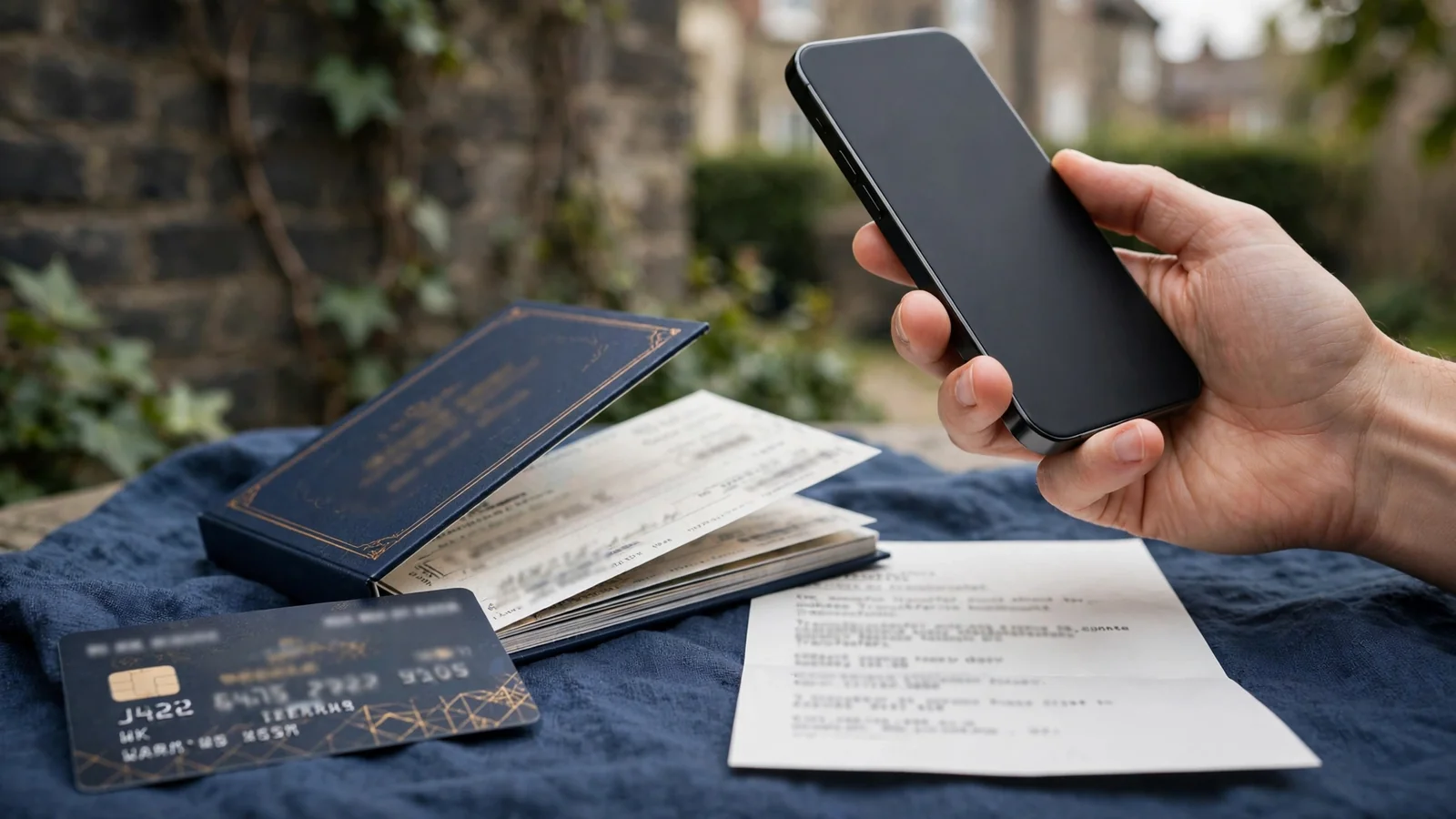
An e-check is generally understood as an electronic payment drawn from a bank account, rather than a paper cheque handed over for processing. That label can make sense in markets where casinos present electronic cheque payments as a named cashier option. In the UK, the same underlying idea may be described through different payment language, so the label alone does not tell much about how a casino’s deposit route is set up.
I have found that payment terminology often reflects the provider’s system, not just the source of the money. A bank-account payment might be presented as a bank transfer or through open banking, for instance, rather than called an e-check. Those routes can involve different authorisation steps and interfaces even when the money ultimately comes from a bank account. Treating them as interchangeable because they all touch a bank account is an easy way to misunderstand the cashier.
That distinction matters when someone is looking for an online casino that takes e-check payments in the UK. The phrase expresses a practical preference: funding from a bank account, without relying on a card or a separate wallet. It does not establish that UK casino sites use the US-style e-check label, or that a bank-connected payment option works like an electronic cheque. The name and the mechanics are separate questions.
::: top-operators
When looking at UK casinos associated with echeck payments, payout timing is one practical detail to consider. Use this list as a starting point and check each operator’s payment terms for echeck availability.
### 1. Amunbet
**Payout speed:** 1-3 business days
Amunbet lists a payout speed of 1–3 business days. Check its payment terms for details about echeck availability.
—
### 2. Dieselwin
**Payout speed:** 1-3 business days
Dieselwin lists a payout speed of 1–3 business days. Its echeck options should be confirmed directly in the payment terms.
—
### 3. Zombillion
**Payout speed:** 1-3 business days
Zombillion lists a payout speed of 1–3 business days. Consult its payment terms to confirm whether echeck is available.
—
### 4. BeOnBet
**Payout speed:** 1-3 business days
BeOnBet lists a payout speed of 1–3 business days. Check its payment terms for information on echeck availability.
—
### 5. NightLuck
**Payout speed:** 1-3 business days
NightLuck lists a payout speed of 1–3 business days. The available information does not specify its echeck options, so check its payment terms.
—
### 6. Jetsetspins
**Payout speed:** 1-3 business days
Jetsetspins lists a payout speed of 1–3 business days. Confirm echeck availability in its payment terms.
—
### 7. x3bet
**Payout speed:** 1-3 business days
x3bet lists a payout speed of 1–3 business days. Check its payment terms to establish whether echeck is an option.
—
### 8. Britsino
**Payout speed:** 1-3 business days
Britsino lists a payout speed of 1–3 business days. Its payment terms are the place to confirm echeck availability.
—
### 9. SlotoSport
**Payout speed:** 1-3 business days
SlotoSport lists a payout speed of 1–3 business days. Check its payment terms for details on whether echeck is available.
—
### 10. Revery Play
**Payout speed:** 1-3 business days
Revery Play lists a payout speed of 1–3 business days. Confirm echeck availability in its payment terms.
:::
A specialist casino review has described open banking and bank transfers as routes that can support instant deposits and fast withdrawals at many sites. That is a report about those payment categories, not a guarantee for every operator or account. It also does not make them e-checks. A payment that starts with bank authorisation may still be processed under its own provider’s rules, with its own eligibility and transaction flow.
This is where wording can create false certainty. “Bank payment” sounds like one method, but can cover multiple ways of authorising a transfer. “E-check” may point to a particular system in one country and be absent from the terminology used by a UK casino. The practical comparison is therefore between the payment route actually offered and the desired funding source—not between two labels assumed to mean the same thing.
I have seen payment copy flatten these differences into a simple promise: “direct from your bank”. In practice, that phrase says little about the steps involved. It may describe an account-to-account transfer, an open-banking connection, or a provider-mediated transaction. The customer’s bank may be involved in each, but that does not make the route identical to an e-check product. Labels sell simplicity. The underlying flow is more specific.
There is also a difference between the way a deposit is funded and the name shown on the casino’s payment page. Someone searching for a way to pay by e-check may be less attached to the terminology than to the source account and the level of control involved. If that is the underlying need, bank-linked routes are relevant alternatives to understand—but they should not be relabelled as e-checks without evidence that the casino or provider uses that method name.
$$LINKCARD casinos-that-accept-ukash-uk$$
Payment details also have to make sense as a set. Using account information and a payment route belonging to the same customer can reduce avoidable friction caused by basic ownership mismatches. That is not a promise that a transaction will go through without review; it is a straightforward operational point. When names or account details do not line up, a casino may need to resolve the discrepancy before treating the payment as routine.
The UK context adds another reason to be precise about what a payment term means. Remote gambling businesses serving Great Britain need the relevant [Gambling Commission licence](https://www.gamblingcommission.gov.uk/guidance/guidance-to-licensing-authorities/part-1-primary-legislation), wherever the business is based. A payment label does not tell whether a casino holds that licence, just as a familiar bank-payment term does not establish that a particular transaction route is available to a particular account. Those are separate checks, not qualities contained in the wording.
So an e-check search can be read as a request for a bank-account-based way to fund casino play, rather than proof that a specific UK payment product exists under that name. Open banking and bank transfers are documented terms to recognise in this context, but neither should be casually renamed. Exact labels matter. So does the route behind them.
## Checking Whether a Casino Accepts E-Check
A payment method is available only when the casino’s cashier offers it for the account in question. A mention in a general payment guide, an old review or a search result is not the same as an option that can be selected at deposit. For e-checks, that distinction matters: the label should not be treated as proof that a UK casino accepts them.
$$LINKCARD casinos-that-accept-ethereum-uk$$
I would look for the method inside the site’s own payment area, after signing in and setting the account’s country and currency. The cashier is where an operator can show methods relevant to that account. If “e-check” does not appear there, there is no basis for treating it as an available deposit route. If it does appear, the accompanying terms still need to make clear what the operator means by the label and which transactions it supports.
That is a practical test, not a guarantee that a payment will go through. A displayed method may still depend on account eligibility, payment details or checks during the transaction. The important point is to distinguish a selectable option from a general statement that the site supports electronic payments. Similar wording does not establish that the underlying service is the same.
### Check the cashier, not just the payment page
A site may have a public page describing its payment methods, but a cashier view provides a more direct indication of what the account can use. I would check the deposit screen itself and read any method-specific notes before entering details. If an e-check option is named, look for a description of the payment process, the provider involved and any terms that clarify whether the method is available to UK customers.
Do not infer acceptance from a bank logo, a generic “bank payment” reference or a list of electronic options. Those descriptions can cover different services. The name needs to be explicit enough to distinguish an e-check from a bank transfer or another route. If the wording is unclear, the operator’s customer support can be asked to confirm whether the method is available for a UK account and can be used for the intended transaction.
$$LINKCARD casinos-that-accept-ewallets-uk$$
I would keep the question narrow: is e-check currently selectable in the UK cashier, and what conditions apply to that account? A general reply that the casino accepts online payments does not answer it. Nor does a statement about another country’s cashier establish UK availability.
### Treat published payment lists as a starting point
A specialist casino review may list Visa and Mastercard, but a published card list is not a current confirmation that a particular card product can be used by a UK customer. UK casinos commonly accept debit cards, including Visa and Mastercard; the cashier still needs to be checked for current availability and eligibility. That same discipline applies to e-checks. A named method in a review can point towards something worth checking, but it is not a substitute for the operator’s current cashier.
The distinction is easy to miss because payment pages often group options under broad labels. A bank-related method may sound close enough to an e-check in ordinary language, but payment labels are not interchangeable. If the cashier names a different service, that does not establish e-check acceptance. The method shown, rather than a loose interpretation of its description, is what matters.
Card terminology also needs care. The relevant UK casino card route is a debit card; credit-card payments for gambling are not accepted by UK-licensed casinos. A logo alone does not settle which card product is eligible. The cashier’s terms should be checked before attempting a deposit.
::: dos-donts
#### Do
– Check the deposit screen inside the signed-in cashier
– Read method-specific notes before entering details
– Ask customer support to confirm UK availability
—
#### Don’t
– Infer acceptance from a generic bank logo
– Rely on a public payment page or old review
– Assume a “bank payment” reference is an e-check
:::
### What counts as confirmation
For a cautious assessment, I would look for three things together: the method is explicitly named, it appears in the cashier for a UK account, and the operator’s terms describe its use. If one of those is absent, the claim should remain unverified rather than being upgraded to “accepted.” This avoids turning a vague reference to electronic banking into a claim about a specific payment method.
An e-check listing can also be limited in scope. The cashier may identify it as available for a particular account or transaction type, while the terms explain any conditions. Availability should therefore be read as account-specific, not assumed from a casino’s general branding or from an unrelated payment page.
This is how I would assess claims about casinos that accept e-checks in the UK: check the logged-in cashier, confirm the exact name, and verify that the terms apply to UK customers. Without that confirmation, I would not label a casino an e-check option. A careful answer is less dramatic. It is also more useful than a confident list built on ambiguous wording.
## Which Deposit Routes UK Casino Sites Actually Document
When comparing the [payment information published for casino sites](/payment-methods/), the practical picture is broader than a single method. A specialist review of casino payment pages recorded Visa and Mastercard, bank transfer, e-wallets and several cryptocurrencies among the routes mentioned. That is a snapshot of what those pages documented, not a promise that every method appears at every casino or remains available to every account. The cashier is where the operator’s current options are shown.
The labels also cover different kinds of service. A card payment is not the same as a transfer from a bank account, and an e-wallet is not itself a bank transfer. Cryptocurrency is another distinct category, with its own transaction path. Treating all of these as interchangeable “online payments” obscures what matters at the point of deposit: the payment method must actually be presented for the account and transaction in question.
$$LINKCARD casinos-that-accept-tether-uk$$
For cards, the UK distinction is essential. Debit cards, including Visa and Mastercard, are commonly accepted by UK casinos, but credit-card payments for gambling are prohibited. The regulator introduced that ban on 14 April 2020, and it remains in force. A familiar card-network logo therefore does not establish that every card product can be used. The card type and the option presented in the cashier matter.
Bank transfer appears in payment information as a separate route. Open banking services may also be presented under their own names rather than simply as “bank transfer”. The wording on a casino page can describe a transfer-based option without telling the full story of how it is initiated or what the customer’s bank will display. I treat the cashier’s exact method label as more useful than a broad category on a general payment page.
E-wallets form another group, but their names should not be read as a guarantee of availability or identical terms. PayPal is popular for speed and convenience, while a specialist review has reported that it may be excluded from bonus eligibility; that condition needs checking against the casino’s current promotion terms. A specialist review has also described Skrill and Neteller as available at some sites and often excluded from promotions. Those are not universal conditions. A payment method and a promotional offer are separate parts of the cashier decision.
Paysafecard is a prepaid voucher and is deposit-only. That distinction is easy to miss when a page places it beside methods that may have a different role in the account. A method shown for adding funds should not automatically be assumed to be available for receiving a payout. The payment terms and cashier labels determine what function the operator assigns to it.
Some UKGC-licensed casinos also accept Apple Pay for deposits. Its presence is an example of why a static list can age quickly: payment options depend on the operator’s current setup and may differ between sites. A method mentioned in a general review is a useful lead, not a substitute for the live payment screen. The same principle applies to e-wallets and bank-linked services.
$$LINKCARD casinos-that-accept-usdc-uk$$
The currency setting deserves attention before any route is selected. A specialist review of casino payment pages reported GBP support, but the account currency still needs confirming before the first transaction. A casino page can mention a supported currency without establishing what currency a particular account was opened in. If the account and payment route use different currencies, conversion may enter the transaction. The point is not to assume that a UK-facing site automatically holds every account in pounds.
In practice, the published payment menu is a starting point, while the cashier provides the account-specific view. The method name, its deposit role, the permitted card type and the displayed currency are separate details; one does not confirm the others. That is the useful way to read lists of documented alternatives, including when a preferred route is not shown. No logo settles the question.
## Deposit Speed Is Not the Same as Payout Speed
A payment can reach a casino account quickly without giving any indication of how quickly a later withdrawal will arrive. These are separate journeys, with different checks and hand-offs. The deposit is money moving towards the operator; a payout has to be requested, reviewed and sent back through an approved route. Treating both as one measure of “speed” can make a cashier description sound more informative than it is.
$$LINKCARD casinos-that-accept-litecoin-uk$$
A specialist review describes card deposits as potentially instant, while a payout can take several business days. That contrast is the useful point: a completed deposit confirms that the incoming payment has gone through, not that a future withdrawal will be released on the same schedule. The operator may still need to review the withdrawal, and delivery then depends on the route used and the systems involved.
I would read “instant” narrowly. It describes a particular stage of a deposit, not the full transaction lifecycle and not a promise about withdrawals. A balance appearing promptly on screen is not the same as a withdrawal request being approved, sent and credited to a bank account. Separate clocks. Separate steps.
### Where the time goes
A withdrawal can involve an internal review before funds leave the casino. The payment then has to travel through the relevant provider or banking route. If the account has not completed verification, the operator may need to finish that work before releasing the payment. This is one reason a displayed processing estimate should not automatically be read as the time until money is usable.
::: info-callout
Processing estimates often refer to the operator’s action of releasing a payment, which is distinct from the time it takes for the recipient bank to post the funds.
:::
The distinction matters when comparing a rapid deposit route with a bank transfer for receiving funds. A bank transfer may be initiated by the operator but not appear in the receiving account straight away. A specialist review notes that delivery can be affected by bank cut-off times, weekends and currency conversion. Those are operational details, not necessarily signs that a payment has failed.
A cut-off time can determine whether an instruction is handled in the current processing window or later. A weekend can interrupt ordinary banking movement. If the payment involves conversion, the transfer may also pass through an additional step before the amount is credited in the account’s currency. The exact effect depends on the casino, the banks and the transaction; a general claim about a fixed arrival time would conceal those differences.
There is a practical gap between “processed” and “received”. Casino wording may refer to the operator’s action, while the customer is watching for the funds at the other end. When a status changes to processed, that can mean the casino has released the payment; it does not necessarily mean the recipient bank has posted it. The status labels are easy to conflate. They describe different points in the chain.
### What a fast deposit tells you
For someone comparing payment routes, deposit speed answers a limited question: how soon can the casino account be funded after the payment is accepted? It does not answer how long a withdrawal review takes, whether a payout route is available for that account, or when an external bank will credit the funds.
That distinction applies even when an e-check is described as an instant deposit option. The word “instant” would need to be tied to the precise stage it describes. It cannot, on its own, establish that a UK casino offers e-check deposits, or that an e-check withdrawal would be immediate. A deposit claim and a payout claim require separate confirmation.
$$LINKCARD casinos-that-accept-muchbetter-uk$$
I have seen timing language do too much work in payment copy: one fast step is made to stand in for the whole journey. The cleaner reading is to separate the casino’s handling time from the provider’s delivery time, then check which event the stated estimate actually covers. If the wording does not say whether it refers to approval, dispatch or receipt, it is not a complete timetable.
For bank transfers, the stated arrival estimate should be read alongside the operating details: when the casino submits the payment, whether a weekend intervenes, and whether currency conversion is involved. None of these factors guarantees a delay, but each can affect delivery. An instant deposit and a slower payout can therefore coexist without contradiction. They are different transactions moving in opposite directions, under different conditions.
The useful comparison is not simply “fast” against “slow”. It is the point at which the clock starts, the step the estimate measures, and what still has to happen before funds reach the destination. A deposit confirmation settles only the incoming side. The payout has its own process.
## What the E-Check Label Can—and Cannot—Confirm
An “e-check” label is not, by itself, evidence that a UK casino accepts that payment route. The term may appear in a general payment description, an old promotional page or a cashier designed for several markets. None of those establishes that the option is available to a UK account. I have seen payment wording treated as if it were a working checkout button; the distinction matters. A label describes a claim. It does not complete a transaction.
$$LINKCARD casinos-that-accept-echeque-uk$$
That is especially important where the method is presented as a convenient alternative to cards or bank payments. Those descriptions can sound definite while leaving out the conditions that govern actual use: market, account eligibility and the operator’s current setup. Without a confirmed UK cashier option, e-check should not be described as an established UK casino payment method. No assumption from the name alone.
There is a separate control before any payment choice comes into play. [UK Gambling Commission rules](https://www.gamblingcommission.gov.uk/guidance/guidance-to-licensing-authorities/part-1-primary-legislation) require remote gambling licensees to ask new customers to set a financial limit before they make their first deposit. They must also make account-level limit controls accessible. These are not optional features attached to a particular payment type; they apply to the account and its gambling activity.
Age control sits alongside that requirement. A remote gambling licensee must verify a customer’s age before permitting a deposit. That means an unfamiliar payment label cannot bypass the checks that apply to the account. The payment route and the permission to deposit are different questions.
In practice, payment language is only useful when it reflects the route actually enabled for the relevant account. A casino may describe a method broadly, while the cashier’s available choices and account controls determine what can be done. Promotional wording is not operational confirmation. Neither is a payment logo.
I would treat an e-check reference as a claim requiring confirmation, not as a promise of acceptance. That is a narrower conclusion, but it is the defensible one. The label alone proves little.
$$LINKCARD casinos-that-accept-dogecoin-uk$$
## Comparing Casino Payment Costs Without a ‘Best’ Claim
A payment method can look inexpensive at the cashier and still cost more by the time the transaction is complete. The displayed casino charge is only one possible part of the calculation. A specialist review of payment costs also identifies fees from the payment provider, card issuer or bank, currency conversion and the relevant payment network. Which of these applies depends on the route and the transaction.
That is why “best” is not a useful cost verdict on its own. A method with no visible casino fee may still involve a provider charge or a less favourable exchange rate. A flat fee can be easy to spot, while a conversion spread is built into the rate and less obvious. A network fee may also apply to a route that uses one. No single route can be called the cheapest without checking the charges that affect the actual payment.
I compare like with like: the same deposit amount, the same account currency and the same point in the transaction. If an account is set to a currency other than GBP, the exchange rate can change the sterling cost; a casino’s stated fee does not necessarily include that difference. The payment provider or bank may apply its own rate or charge as well. Small print matters. So does the rate shown at the moment of payment.
The same discipline applies to an e-check option. A label alone says nothing about the total cost, and it should not be treated as proof that a UK casino offers the method. If it appears in a cashier, the relevant comparison is the amount debited from the bank against the amount credited to the casino account, including any stated fees and currency conversion. An apparent zero-fee deposit is not necessarily a zero-cost transaction.
::: warning-callout
A zero-fee deposit at the casino level does not guarantee a zero-cost transaction, as provider charges, bank fees, or exchange-rate spreads may still apply.
:::
I would not rank payment routes by a headline fee. The useful comparison is the full cost for the intended amount, with casino charges, provider or bank fees, exchange-rate spread and network costs considered together. If those details are not visible before confirmation, the price is not yet clear. Better to pause than guess.
## Payment Availability on Casino Apps
An app is a way into the casino account, not proof that every payment option is available there. I treat the cashier as the deciding point: a method named on a general payments page may not appear for a particular account, device or transaction. The same distinction matters when looking for an e-check option. An app’s presence does not establish that it accepts e-check deposits.
The check should happen in the signed-in cashier, before a deposit is started. Payment tiles can be conditional, and the available choices may depend on account details or the product being used. If a method is absent, its appearance in a promotional page or a third-party summary does not make it selectable in that app. No mystery. Just a different layer of the service.
Apple Pay is accepted for deposits at some UKGC-licensed casinos, but that does not make it universal across apps or accounts. Nor does a deposit option imply that the same route can be used for withdrawals. The cashier’s displayed terms need to be read for the transaction in question; an icon alone says little about the conditions attached.
Visa and Mastercard appear in specialist casino reviews, but that listing is not a live check of UK availability. The cashier should confirm whether a card is currently supported and whether the specific card product is eligible. This is important because remote gambling licensees cannot accept credit-card payments for gambling, including credit-card funding routed through a money service business. A card logo is not permission to use any card bearing that logo.
$$LINKCARD casinos-that-accept-ideal-uk$$
I have seen payment descriptions treated as if they were fixed features of the app. They are better understood as claims to verify at the point where a deposit is actually configured. A mobile interface may expose the cashier differently from a desktop page, but that is not evidence of a new payment route. If an e-check label does not appear as a usable option in the app cashier, it should not be inferred from the app’s availability or from a general list of methods.
For a UK account, the practical test is therefore narrow: open the cashier, check the payment methods offered for that account, and read the accompanying eligibility wording before proceeding. An app is only the interface. The cashier decides.
## Deposit Limits Depend on the Method and Account
A minimum deposit is not a market-wide constant. A specialist casino review places some minimums in the £10–£20 range, while noting that the amount depends on the payment method. That is a reported range, not a promise that every cashier will accept either amount. The figure shown beside a particular option is the operative one.
Maximums can be set per transaction, per day or per month, and may differ between payment methods. Account status can affect them too. In practice, the cashier may show a method-specific ceiling, while account controls or checks can place a separate restriction on what is available. I treat those as different limits: one belongs to the payment route; the other to the account.
::: danger-callout Credit Card Ban
UK-licensed casinos are prohibited from accepting credit-card payments for gambling; only debit cards are permitted.
:::
A payment option appearing in a cashier does not establish that it supports every deposit amount. Nor does an advertised minimum tell the whole story if the account is subject to a lower personal limit. The amount entered, the method selected and any account-level controls all need to line up before a deposit can proceed.
There is also a regulatory control before the first deposit. UKGC rules require remote gambling licensees to prompt new customers to set a financial limit, and to make account-level limit controls accessible. That personal limit is not the same as a payment provider’s maximum. It is a separate control over gambling funds.
The practical point is simple: limits are conditional, not universal. A specialist review can describe a range, but the live cashier and account settings determine what applies to a specific transaction. No fixed figure travels reliably from one method and account to another.
## Payment Security: Why Consistent Account Details Matter
A payment method is not just a way to move money; it also creates an ownership record. In casino operations, mismatches between the account holder and the payment account can trigger questions that a straightforward transaction would not. The practical rule is simple: the casino account and the payment route should belong to the same customer.
$$LINKCARD casinos-that-accept-click2pay-uk$$
I have seen how small inconsistencies can turn an ordinary transaction into a review. A different name, an account registered to someone else or unclear ownership does not prove wrongdoing, but it can make the operator pause while details are checked. That is an anti-fraud control, not a judgement about the player.
The cleanest arrangement is often one named account used consistently for deposits and withdrawals. It gives the operator a clearer transaction trail and reduces avoidable friction around ownership checks. Switching between payment routes can complicate that trail, particularly when a later transaction needs to be matched to an earlier deposit.
UK anti-money laundering controls also explain why funds commonly go back to the original payment source. Returning money along the route it came in helps demonstrate that the transaction is connected to the same customer, rather than being redirected to an unrelated account. An alternative destination may be considered, but can involve additional verification.
$$LINKCARD casinos-that-accept-interac-uk$$
That distinction matters when assessing any payment label, including e-check. A method name alone does not establish who owns the account behind it, whether the casino accepts it, or how withdrawals are handled. The underlying account details still matter.
Consistent ownership is not paperwork for its own sake. It gives the operator a defensible record and helps keep a routine payment from becoming an investigation. Clean trail.
## E-Check Withdrawals and the Original-Source Rule
An e-check deposit does not, by itself, establish that an e-check withdrawal is available. The cashier’s payout options determine what can be requested, and the label used for a deposit should not be treated as confirmation of a matching withdrawal route. I would separate those two steps before making any assumption about how winnings can be paid.
For UK customers, anti-money laundering rules commonly mean that a casino returns funds to the original payment source. This closed-loop approach is a control on how money moves out of the account, not a promise that every deposit method supports withdrawals. If a requested route is unavailable, an alternative payout method may involve additional checks.
There is also a casino-side stage before a withdrawal is sent. A specialist review notes that processing can take longer on a first withdrawal while verification is completed. That is a specific observation, not a fixed timetable for every operator. In practice, an incomplete KYC check or an internal approval still in progress can leave a payout pending even when the payment method itself appears straightforward.
The useful distinction is between a method being named in a cashier and being eligible for both directions of a transaction. An e-check option shown for deposits is not evidence that the same account can receive a withdrawal by e-check. Nor does a successful deposit settle what will happen when a payout is requested.
For that reason, any claim about an e-check casino withdrawal in the UK needs to be tied to the operator’s current cashier and withdrawal terms. The payout route, verification status and approval process all matter. No shortcut around the checks.
::: faq
## Why must withdrawals return to the deposit method?
Returning the money to the original payment source is a common anti-fraud and anti-money-laundering control. Using a payment method in the same customer’s name can also help avoid ownership checks or mismatches.
—
## What is the fastest withdrawal method for UK casinos?
PayPal, open banking services and debit cards linked to fast payout systems are generally among the quickest options. The casino’s approval process and whether your account is verified also affect how soon you receive the money.
—
## Are Visa and Mastercard deposits definitely debit cards?
No. Visa and Mastercard are listed as accepted card brands, but you should check the cashier to confirm that your specific card product is eligible; UK gambling with credit cards is banned.
—
## Why can a fast payout casino still delay my withdrawal?
A quick payment method does not bypass the casino’s internal approval process. A first withdrawal may take longer while verification is completed, and payouts can also be affected by transfer cut-off times or weekends.
—
## Do UK casino withdrawals require verification?
Verification may be needed before a withdrawal is approved, and first withdrawals can take longer while checks are completed. Having a fully verified account can help avoid this source of delay.
—
## Are fast casino withdrawals guaranteed?
No. Withdrawal speed depends on the casino’s approval process, whether your account is verified and the payment method; bank transfers can also be affected by cut-off times and weekends.
—
## Which payment methods are accepted in Great Britain?
Common options include debit cards, PayPal, open banking, bank transfers and e-wallets such as Skrill and Neteller. Some sites also offer Apple Pay or Jeton; Paysafecard is for deposits only, and available methods should be checked in the cashier.
:::
[Responsible Gambling](/responsible-gambling/)