

# Mobile Top-Up Casino Payments in the UK
::: hero-subtitle
A clear guide to distinguishing phone-billed deposits from ordinary payments made on a mobile device.
:::
## What “Mobile Top-Up” Means at a Casino Cashier
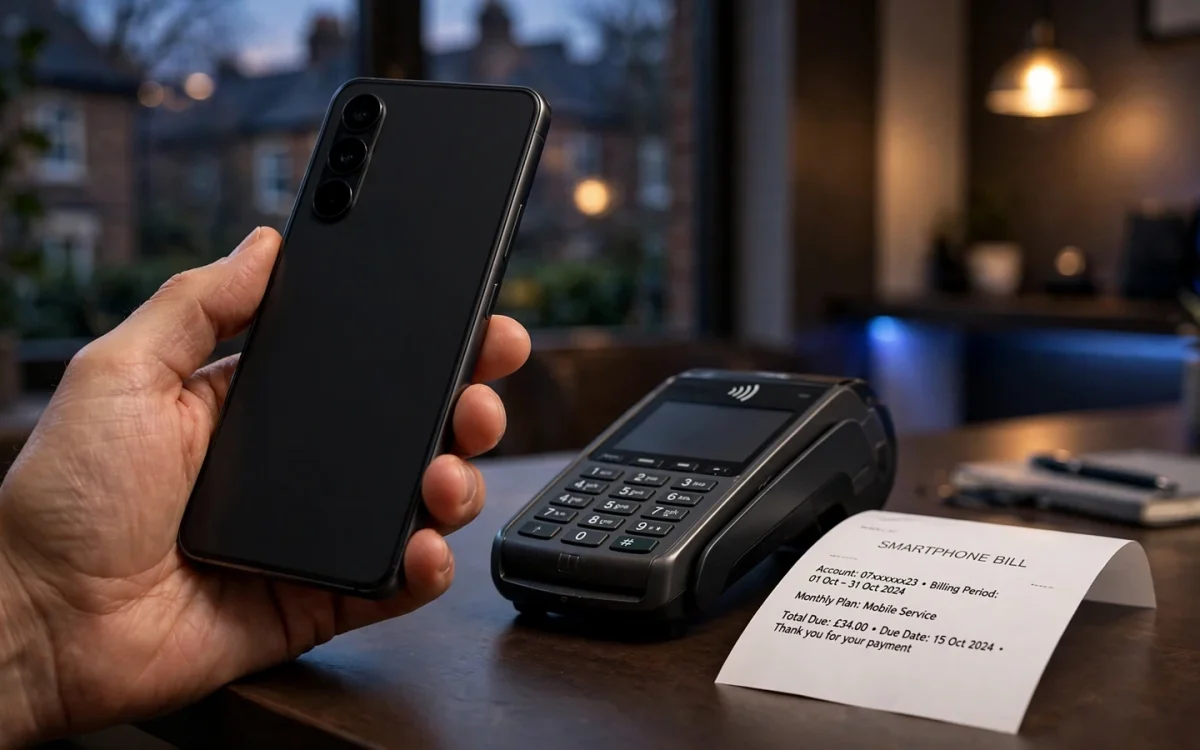
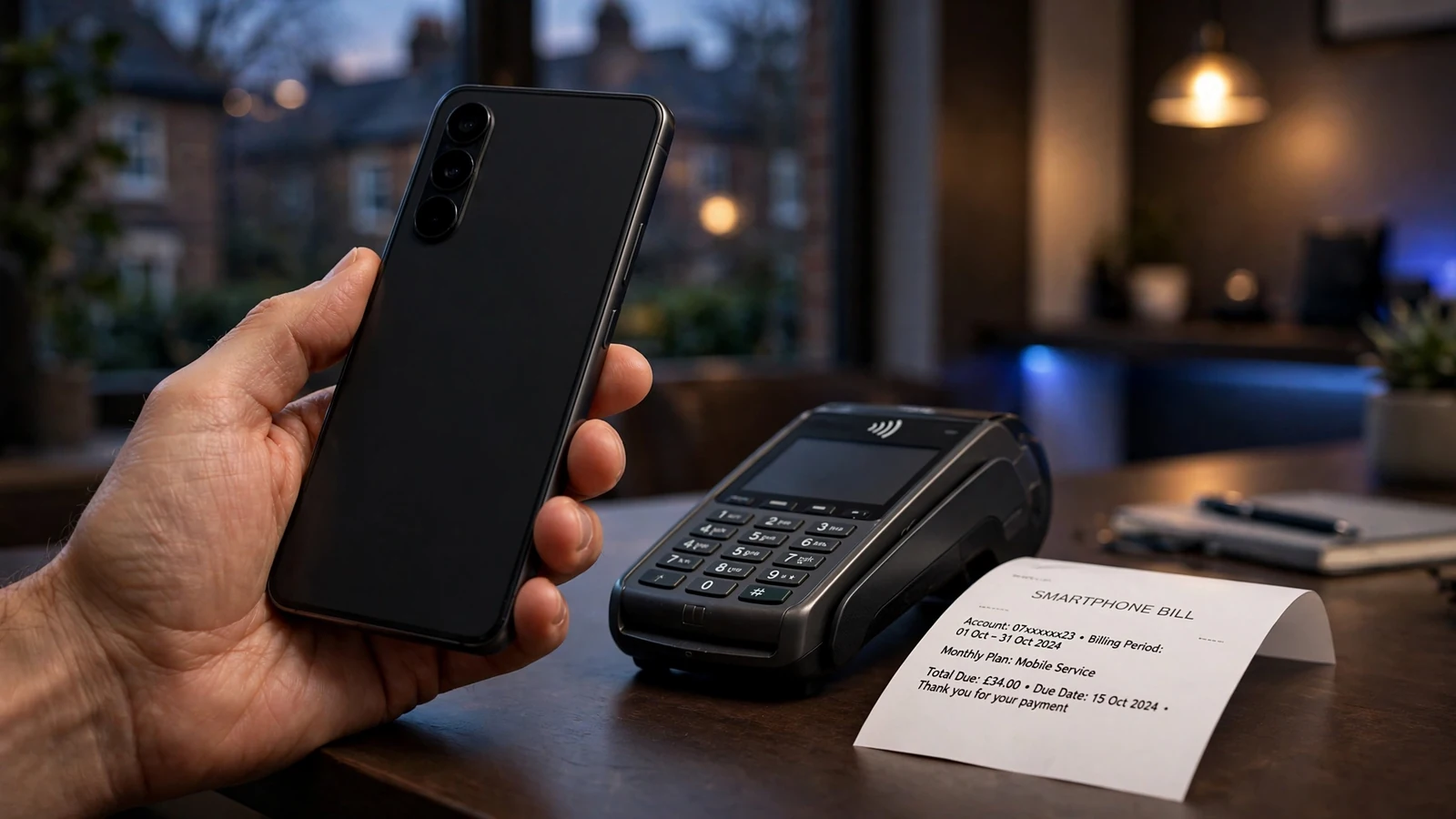
“Mobile top-up” can sound like adding credit to a phone. At a casino cashier, it means something different: a deposit is charged through the mobile network rather than paid by entering card details on a phone. [With Payforit, the amount is either](/payment-methods/payforit-mobile-casinos-uk/) added to a monthly phone bill or deducted from a Pay as you Go balance. The phone is the billing route; it is not simply the device used to make an ordinary online payment.
That distinction matters because the word “mobile” is doing two jobs. It can describe the screen used to access a casino, or it can describe how a deposit is funded. Paying by debit card on a mobile phone is a mobile transaction in the first sense. A Payforit deposit is a mobile top-up in the second. The two may look similar in a cashier menu, but the charge lands in different places.
I have seen this confusion arise when a payment option is advertised as “quick” or “easy”. Those words describe the experience at the point of selection, not the financial arrangement behind it. The useful question is not whether the casino is being used on a phone, but whether the amount will be taken from phone credit or placed on the network bill. That is the boundary that defines pay by phone.
::: top-operators
When choosing a UK casino for mobile top-ups, it is worth checking the available payment information before you play. The listed payout time offers one concrete detail to consider.
### 1. Amunbet
**Payout speed:** 1-3 business days
Amunbet lists a payout time of 1–3 business days. This is the only confirmed detail available here.
—
### 2. Dieselwin
**Payout speed:** 1-3 business days
Dieselwin lists a payout time of 1–3 business days. This is the only confirmed detail available here.
—
### 3. Zombillion
**Payout speed:** 1-3 business days
Zombillion lists a payout time of 1–3 business days. This is the only confirmed detail available here.
—
### 4. BeOnBet
**Payout speed:** 1-3 business days
BeOnBet lists a payout time of 1–3 business days. This is the only confirmed detail available here.
—
### 5. NightLuck
**Payout speed:** 1-3 business days
NightLuck lists a payout time of 1–3 business days. This is the only confirmed detail available here.
—
### 6. Jetsetspins
**Payout speed:** 1-3 business days
Jetsetspins lists a payout time of 1–3 business days. This is the only confirmed detail available here.
—
### 7. x3bet
**Payout speed:** 1-3 business days
x3bet lists a payout time of 1–3 business days. This is the only confirmed detail available here.
—
### 8. Britsino
**Payout speed:** 1-3 business days
Britsino lists a payout time of 1–3 business days. This is the only confirmed detail available here.
—
### 9. SlotoSport
**Payout speed:** 1-3 business days
SlotoSport lists a payout time of 1–3 business days. This is the only confirmed detail available here.
—
### 10. Revery Play
**Payout speed:** 1-3 business days
Revery Play lists a payout time of 1–3 business days. This is the only confirmed detail available here.
:::
Payforit is a named payment method for this route. It is not a general label for every casino deposit made from a handset, and it should not be treated as interchangeable with a card payment. A cashier may present several ways to fund an account, but selecting Payforit means the transaction is linked to the phone service. The casino account receives a deposit; the mobile account or bill carries the charge.
The amount also has a defined scale. A specialist review reports Payforit minimum deposits in the £3–£5 range, but that is not a fixed promise for every cashier. The amount displayed when the method is selected is the relevant one for that account. The Phone-paid Services Authority is reported as setting a £30 ceiling per Payforit transaction. That ceiling is a boundary on an individual payment, not a statement that every casino must offer the same minimum or accept the maximum.
This is why “top-up” can be an imprecise description. It may suggest that phone credit is being purchased and then transferred into the casino, like loading a stored-value wallet. The defined Payforit arrangement is instead a charge to the phone bill or a deduction from existing prepaid balance. No separate mobile wallet is implied by the term. The money is routed through the phone service for the casino deposit.
The transaction is therefore limited by more than the wording on a promotional tile. The cashier must support the method, and the amount offered there must fit the applicable transaction boundary. If Payforit does not appear as a selectable option, the fact that a casino works on a phone does not make the method available. Device access and payment support are separate things.
$$LINKCARD casino-sites-that-accept-ecopayz-uk$$
A casino may call the feature a “mobile top-up”, but the more precise description is a pay-by-mobile deposit. That phrasing keeps the funding source in view. It also prevents a common misunderstanding: a top-up is not necessarily a deposit that can be made in any amount, nor does the label mean that the player is adding casino funds to a phone account. The direction runs the other way—the phone service is used to charge the casino deposit.
There is no need to read more into the label than that. It identifies a payment path, not a promise about the full cost, the availability of a particular amount, or the handling of money after it reaches the casino account. Those details depend on what the live cashier presents. The basic definition remains simple: Payforit uses a mobile phone bill or prepaid balance to fund a casino deposit, within a transaction framework that includes a reported £30 per-payment ceiling.
A different route, despite the similar screen.
## Phone Billing Compared with Cards and Other Cashier Options
A mobile top-up at a casino is not simply a card payment made on a phone. The distinction is about where the charge lands: pay-by-phone routes it through a mobile account, while a debit card draws on a bank account. The screen may look similar, but the funding source and the cashier’s conditions are different.
::: card-grid
### Pay-by-Phone
Charges are routed through a mobile account, either as a monthly bill or a deduction from prepaid credit.
—
### Debit Card
Funds are drawn directly from a bank account and are generally more widely accepted at UK casinos.
—
### E-wallet / Voucher
Uses an intermediary account or a prepaid voucher loaded separately to fund the casino account.
:::
From the counter side, the first useful comparison is not which method sounds easiest. It is which methods the casino actually offers to that account, and what each one permits. A specialist review of casino payment options may list Visa, Mastercard, Skrill, Neteller, PaysafeCard and [major cryptocurrencies](/payment-methods/anonymous-crypto-casino-uk/). That is a snapshot of what the review found, not a promise that every method will appear at every operator. Payment menus change, and a method listed in an external review may be absent from the live cashier.
Payforit sits in a narrower category. Specialist reviews identify Boku, e-wallets and Paysafecard as alternatives when a casino offers pay-by-mobile. These are not interchangeable routes: Boku is another phone-based option, while an e-wallet or prepaid voucher is a separate way to fund an account. Their presence depends on the operator’s current payment setup. A name on a general list does not establish that it can be selected for a particular account.
Debit cards are the more direct comparison. Specialist reviews describe debit-card deposits as free at UK casinos and more widely accepted than Payforit. That can make a card a practical fallback when the phone-billing option is unavailable. Still, the wording in a review should not be treated as a live cashier result. The operator’s own deposit page is where the available routes and any stated charges for that account are shown.
$$LINKCARD tron-trx-casino-comparison-uk$$
There is an important distinction between debit and credit cards. The [UK Gambling Commission’s rules prevent remote](/payment-methods/casino-sites-that-accept-credit-card-uk/) gambling operators from accepting credit-card payments for gambling, including when a money service business is used to pass the payment on. A card displayed in a wallet or payment service does not change that restriction. For gambling deposits, the funding route matters, not just the logo shown at checkout.
### What the alternatives change
A bank card connects the deposit to a bank account; pay-by-phone connects it to a mobile account. An e-wallet introduces an intermediary account, and a prepaid voucher uses value loaded separately. These differences affect what the player has to hold or access before paying, and which routes the operator has chosen to support. No method is automatically the better one for every account.
In practice, the cashier is the point where general comparisons become specific. It can show whether Payforit or Boku is available alongside Visa or Mastercard, whether an e-wallet appears, and whether the selected method has a stated minimum or maximum. Fees and account-level financial controls also need checking before a deposit. Those details cannot safely be inferred from the method’s name or from another casino’s payment page.
I have seen payment copy describe a route as “simple”, when the real difference is merely that it moves the charge to a different place. A phone-bill deposit may avoid entering card details, but that does not make it equivalent to a debit-card transaction. Nor does having one mobile payment route mean the cashier offers another. Method, account and operator all matter.
::: dos-donts
#### Do
– Check the live cashier for available payment methods
– Verify the specific terms of a bonus offer
– Confirm withdrawal routes independently
—
#### Don’t
– Assume a review’s payment list is always live
– Treat “simple” as a financial equivalence
– Infer withdrawal options from the deposit menu
:::
The comparison also needs to stay separate from assumptions about cashing out. A deposit option shown in the cashier does not, by itself, establish that the same route can be used to withdraw. That question belongs to the account’s payout conditions, which should be checked independently rather than inferred from the deposit menu.
For online slots funded from a phone, the same rule applies: “mobile” describes the payment route, not a blanket promise of availability. A casino may support phone billing for some accounts and present different options to others. Reviews help identify the range of methods worth looking for; the live cashier settles what is currently offered. General comparison first. Account-specific confirmation matters.
## What Happens When a Deposit Goes on the Phone Bill
A casino top-up by phone changes where the deposit is charged, not what happens to the money inside the gambling account. With Payforit, the charge is attached either to a monthly mobile account or to pay-as-you-go credit. Those arrangements can look similar at the cashier, but the household bill or available balance is affected in different ways.
On a monthly contract, a Payforit deposit is added to a future phone bill. It does not come out of the bank account at the moment the casino balance is credited. The charge appears later alongside the other costs recorded by the mobile provider. That can make the deposit feel less immediate, but the obligation has not disappeared: it has moved onto the next bill.
That distinction matters when reviewing spending. A casino balance may show the deposit as soon as it is processed, while the related phone charge is settled later through the mobile account. The two records arrive on different schedules. In my experience, that separation is where people can lose track of the real cost: the casino shows funds available to play, while the phone bill becomes the reminder of how they were funded.
$$LINKCARD casinos-that-accept-astropay-uk$$
Pay as you go works differently. The deposit is taken from prepaid phone credit rather than added to a later bill. If the available credit does not cover the charge, that balance cannot fund the deposit. The payment therefore draws on value already loaded onto the phone, whereas a contract charge is recorded for payment through the future bill.
Neither arrangement turns the phone account into a casino withdrawal route. Payforit can put money into a casino account, but it cannot send casino funds back to a mobile bill or restore prepaid credit. That is the key mismatch in a mobile casino top-up by phone bill: the deposit travels one way, and any cash-out has to be handled separately.
This is easy to miss because the cashier presents a deposit method as one part of an account. In practice, the payment route has a job: it moves a deposit from the phone service into the casino balance. A withdrawal is a different transaction with its own available methods and checks. The phone charge does not become a reusable channel merely because it was used to fund play.
A specialist review may [list debit-card payments, bank transfers, PayPal](/payment-methods/), or e-wallets such as Skrill and Neteller as possible withdrawal routes at UK-licensed casinos. That is a description of options, not a promise that every route will appear for every account. The live cashier and the operator’s terms determine what can be selected in a particular case. The name of a deposit method alone cannot establish how a withdrawal will be paid.
::: info-callout
Payforit is a one-way funding route; it can move money into a casino account, but it cannot be used to process withdrawals or restore phone credit.
:::
The account records also need to be read as separate events. One entry is the Payforit deposit, associated with the phone account; another is a later withdrawal request, if one is made, through a route the casino accepts. A player expecting a phone-bill credit may be surprised to find that the casino instead asks for a different payment destination. The underlying reason is simple: Payforit does not process casino withdrawals.
For a monthly customer, the practical consequence is that a deposit can remain visible as a casino balance before its phone-bill cost is settled. For a pay-as-you-go customer, the consequence is immediate reduction of prepaid credit. In both cases, the amount deposited is not sitting in the phone account waiting to be returned. It has been transferred into the casino account, and the phone payment method has completed its part.
So “top up by phone” describes a deposit route, not a two-way wallet. The contract version shifts the charge to a later bill; the prepaid version reduces stored credit. The casino balance is separate from both. Clear separation.
## SMS Confirmation: The Step That Moves the Deposit
The confirmation message is not a receipt. It is part of the authorisation sequence: until the required SMS step is completed, the deposit has not passed the point at which the payment is approved. That distinction matters when a screen shows a payment option as selected but the casino balance has not changed.
$$LINKCARD casinos-that-accept-entropay-uk$$
With Payforit, the sequence begins in the cashier. The player selects Payforit and enters a mobile number. A confirmation code is then sent by SMS, and the player submits that code to authorise the deposit. Selecting the method or entering the number alone does not complete the process. The code is the deliberate final action in the sequence.
Boku also requires confirmation by SMS before the funds move. The exact prompts can depend on the cashier flow, so the useful point is not to assume that opening a message or starting a request has completed the payment. The transaction depends on the confirmation being made. If that step is left unfinished, the deposit has not been authorised through the described process.
I have seen payment journeys become confusing when the cashier, text message and account balance are treated as one continuous screen. They are separate stages. The cashier starts the request; the SMS provides the confirmation step; the account balance reflects the result after the transaction proceeds. A message appearing on the phone is not, by itself, evidence that the casino has received a completed deposit.
The practical check is to follow the wording shown in the cashier and complete only the confirmation it requests. For Payforit, that means entering the code received by SMS. With Boku, it means confirming the transaction by SMS before expecting the funds to move. If the flow has not reached that point, repeatedly treating the initial selection as a completed top-up by mobile can lead to a mistaken impression of what has happened.
::: worked-example Deposit Process
### Step 1: Selection
Select Payforit in the casino cashier and enter your mobile phone number.
### Step 2: Authorization
Receive a confirmation code via SMS and submit it to authorize the transaction.
### Step 3: Completion
Wait for the transaction to proceed and check the casino account balance for the credited funds.
:::
This is why [mobile casino top-up by SMS](/payment-methods/pay-by-mobile-casinos-uk/) is better understood as an authorised transaction rather than a one-tap action. The player initiates it, then confirms it through the message step. The final action is not decorative security theatre: it separates a request from an approved charge. A casino top-up by SMS has not crossed that boundary merely because the payment option was chosen.
When the confirmation step is complete, the transaction can proceed. When it is not, there is no basis for assuming that the deposit has moved. The cashier’s status and the account balance are more useful indicators of completion than the mere presence of an SMS. If the process appears incomplete, the important distinction is whether the required confirmation was actually submitted, not simply whether a message arrived.
That is the point where the deposit moves. The sequence is short, but the stages are not interchangeable. Selection starts it; confirmation authorises it.
## Phone-Bill Deposits for Online Slots: The Bonus Trade-Off
Paying for online slots through a phone bill can make a deposit feel separate from the bank account used for everyday spending. The trade-off appears when a promotion is involved: the cashier may accept Payforit while the bonus terms do not treat a Payforit deposit as eligible. Acceptance and eligibility are separate decisions.
A specialist review reports that the majority of UK casinos it assessed exclude Payforit deposits from welcome bonuses and other promotions. That is a review finding, not a guarantee about every operator or a permanent rule. The offer terms and the cashier can change, so an old description of a casino’s promotions is not a reliable substitute for the terms attached to the offer being considered.
$$LINKCARD casinos-that-accept-upaycard-uk$$
I have seen the distinction matter most when a player reads the headline offer first and the payment conditions later. “Welcome bonus” sounds like a general benefit, but the operative wording may restrict which deposits count. If Payforit is excluded, choosing it can mean the money reaches the casino account without triggering the advertised promotion. The deposit itself and the bonus qualification are not the same transaction outcome.
That matters to slot players because a bonus can come with its own conditions, while an ineligible payment method can prevent the offer from applying in the first place. The relevant question is not simply whether mobile slots can be funded by phone bill. It is whether the particular offer accepts a Payforit-funded deposit under its stated eligibility rules. A payment button does not answer that.
There is also no reason to assume that every promotion has identical payment rules. Welcome offers and later promotional offers can be set out separately, and the terms attached to one should not be treated as a ruling on another. The useful check is the wording for the specific offer, including any payment-method exclusions, before the deposit is made. Once the deposit has gone through, the player may have no basis to expect a promotion that the terms exclude.
For someone choosing phone billing because it suits the way they manage spending, the bonus may be secondary. For someone depositing mainly to claim an offer, the order of decisions should be reversed: establish eligibility first, then choose a payment route that meets the stated conditions. Neither choice is inherently better; the consequence depends on what matters more in that session.
::: warning-callout Bonus Eligibility
Many UK casinos exclude Payforit deposits from welcome bonuses and promotions; always check the offer terms before depositing.
:::
“Bonus included” is not always what the cashier means. The terms decide.
A careful reading should separate three things: whether Payforit appears as a deposit option, whether the chosen promotion allows that method, and what conditions apply after an offer is accepted. Those checks prevent a common misunderstanding: seeing a payment method beside a promotion does not prove the promotion will attach to that deposit. The offer’s own rules are decisive.
This is why a phone-bill top-up for slots should not be judged only by how straightforward it seems at the payment stage. A player may value the payment route and knowingly forgo a promotion; another may prefer to use an eligible method for a particular offer. The important point is to make that choice with the exclusion visible, rather than discovering it after the funds have been credited.
One distinction, often overlooked.
## Mobile Slots and Mobile-Only Payment Availability
Payforit is generally reserved for mobile players, so a phone is not just a smaller screen in this context: it is part of the payment route’s intended setting. That can make it relevant to a slot session started on a mobile device, but it does not mean every casino’s mobile site or app will show Payforit in its cashier.
I have seen a common assumption cause confusion: if slots load on a phone, the phone payment option must be available too. Those are separate checks. A casino can support mobile play while offering a different set of deposit methods, and the cashier may present different options depending on the account or the device in use. The practical test is what appears in the live cashier during that session, not a general claim that the casino is “mobile friendly”.
There is also a difference between playing through a mobile browser and using an app. Both are ways to access a casino on a phone, but a payment option should not be presumed to appear identically in each. If Payforit is absent in the current cashier, changing the screen orientation or opening a slot does not establish that it can be used. The payment route needs to be shown as an available option before it is treated as part of that session.
$$LINKCARD binance-coin-bnb-casino-comparison-uk$$
A phone-based slot session can therefore involve two distinct questions: whether the game is accessible on the device, and whether the cashier offers a phone-based deposit method there. “Mobile” in a game description concerns access to play; it is not a promise about payment support. That distinction is easily lost in promotional wording.
The same point matters when a session begins on a phone but later moves to a computer. The ability to continue playing on another device does not prove that a mobile-only payment option will be presented on the computer. Access to games and access to a cashier method are not interchangeable.
For a player looking specifically for slots topped up by mobile, the useful confirmation is narrow: the casino’s current cashier must display Payforit for the account and device being used. A phone alone is not confirmation. The game and the payment option have to meet separately.
## When a Mobile Deposit Needs a Different Payout Route
A pay-by-mobile deposit and a withdrawal are separate legs of a casino account. Payforit can fund play, but it cannot send casino funds back to a phone balance. The practical hand-off therefore needs a payout method that the account can actually use.
A specialist review identifies Boku, e-wallets and Paysafecard as alternatives to Payforit for deposits. That does not make them interchangeable at every casino, or establish that any one of them can handle withdrawals. Boku, in particular, should only be treated as an option when it appears in the current cashier. The useful question is not simply which method accepts a deposit, but what route is available when funds need to leave the account.
A specialist review also advises checking whether the selected deposit method is offered for withdrawals. In practice, I treat that as a separate check, not an assumption carried over from the deposit screen. A review may list debit cards, bank transfer, PayPal or e-wallets such as Skrill and Neteller as payout routes, but availability depends on the operator and the account. The cashier’s current withdrawal options are the operative detail.
$$LINKCARD casinos-that-accept-google-pay-uk$$
Payforit users need a different verified payment source for a payout, such as bank details or an e-wallet, where the operator permits it. The route must correspond with the account holder’s details and currency. Identity checks, the operator’s terms, minimum withdrawal conditions and any account-specific restrictions can also affect whether a request proceeds. A displayed payment logo is not clearance.
I have seen the deposit decision made quickly and the withdrawal route considered only after a balance builds up. That reverses the sensible order. Before paying by phone, the account’s available payout path should be understood; a deposit method is not a promise of a matching return route. Keep the transaction reversible in mind, too: phone-billed deposits are not a substitute for a payout facility.
The route is account-specific. Check it before the money moves.
## Slot Deposits, Phone Credit and the £30 Transaction Ceiling
For a deposit made through Boku, the transaction ceiling is £30. That is a limit on one payment, not a promise that every account can deposit that amount: the cashier may set a lower maximum, and the available balance on the phone can impose a tighter constraint.
A specialist review describes £30 as Boku’s standard per-transaction cap. It is a useful reference, but the live cashier remains the place to confirm the amount offered for a particular account. Limits and network arrangements can change; a remembered figure is not a reliable substitute for the terms shown at payment.
The balance calculation is where a mobile billing casino deposit can fail even when the requested amount appears to fit under the ceiling. The phone credit must cover the deposit and any processing fee charged by the network. A fee may apply, and its amount depends on the network and tariff. On a pay-as-you-go account, that means the available prepaid balance needs to cover the combined charge. With a monthly contract, the network’s billing arrangement still matters: the transaction is not free of possible network costs simply because it is added to a bill.
::: danger-callout Balance Risk
Phone credit must cover both the casino deposit and any network processing fees, or the transaction will fail regardless of the £30 ceiling.
:::
The distinction is easy to miss. The casino amount and the amount taken from phone credit may not be identical. If the fee pushes the total beyond the available balance, the payment may not go through. The £30 ceiling does not absorb that fee or guarantee sufficient credit.
I have seen “up to £30” treated in promotional copy as though it were a straightforward spending allowance. It is only a transaction cap; the usable amount depends on the cashier, the account and the network charge. Check those figures before confirming a mobile-billing deposit for slots. No workaround.
## Choosing a Mobile Top-Up Route Without Guessing
A “best” mobile top-up casino is not established by a payment logo or a sentence on a promotional page. In my experience, the useful test is whether the live cashier shows the terms that apply to the account and the selected payment method. A static review can help identify what to investigate, but it cannot confirm what is available at the point of deposit.
Before paying by phone, the cashier should be checked for the minimum deposit, the maximum transaction value, any fee and the account’s financial-limit controls. New remote customers must be invited to consider a financial limit before their first deposit, and the controls for setting or changing account limits must remain accessible afterwards. These are practical checks, not fine print to leave until a payment fails.
The same scrutiny applies to withdrawals, even though they are a separate stage. A specialist review may describe limits, fees or processing estimates, but those details can change and may depend on the payment route. Public banking information does not provide stable figures for UK casino withdrawals. The cashier’s current withdrawal information is the more reliable reference for the account in question.
I would also read the wording around processing carefully. A stated processing period may describe the operator’s handling of a request, rather than the time for the money to reach an account. The cashier or account terms need to make clear what the statement covers. If the available information does not answer that, a confident claim on a general casino page does not fill the gap.
$$LINKCARD casinos-that-accept-ripple-xrp-uk$$
The decision is therefore less about finding a universal winner and more about matching the displayed conditions to the intended use: deposit cost, transaction boundaries, withdrawal terms and account controls. Minimums, maximums, fees and processing times can vary with both the method and the live cashier. Check the actual route. Then decide.
## Using Phone Credit Without Treating It as a Credit Card
A casino top-up using phone credit is not the same thing as paying with a credit card on a mobile phone. The first describes where the money comes from: a Payforit deposit can be taken from prepaid mobile balance or added to a monthly phone bill. The second describes a credit-card payment, regardless of whether it is entered on a handset or another device.
That distinction matters in Britain. UK Gambling Commission rules prohibit remote gambling licensees from accepting credit-card payments for gambling. The restriction also covers a payment routed through a money service business; changing the route does not turn credit-card funds into an acceptable gambling deposit.
In cashier terms, the device is not the test. A card used on a phone remains a card payment, while a charge against prepaid phone credit remains a pay-by-mobile transaction. “Mobile” describes the channel, not the source of funds. That is the point often blurred by broad labels such as “mobile payment”.
I have seen the distinction treated as a technicality, but it is not. A phone-bill charge is not permission to use a credit card indirectly, and an intermediary does not make that route acceptable. Pay by phone and card funding sit in different categories; neither should be presented as a workaround for the other.
So a casino top up with phone credit should be understood literally: the charge is linked to the mobile account or its prepaid balance. It is not a credit-card deposit merely because the transaction begins on a phone. Short distinction. Important boundary.
::: faq
## What is the maximum I can deposit with Boku at a UK casino?
Boku deposits are capped at £30 per transaction.
—
## Is there a maximum deposit amount with Payforit at UK casinos?
Yes. Payforit deposits are capped at £30 per transaction.
—
## Which UK casinos still accept Payforit in 2026?
Payforit is listed at the cashier at operators such as Kwiff, NetBet, JackpotJoy and Virgin Games.
—
## Do online casino bonuses work with Payforit deposits?
Usually not: most UK casinos exclude Payforit deposits from welcome bonuses and other promotions.
—
## Do UK casinos offer welcome bonuses for Payforit deposits?
Most UK casinos exclude Payforit deposits from welcome bonuses.
:::
[Responsible Gambling](/responsible-gambling/)